Category Archives: Homemade

Purse Project

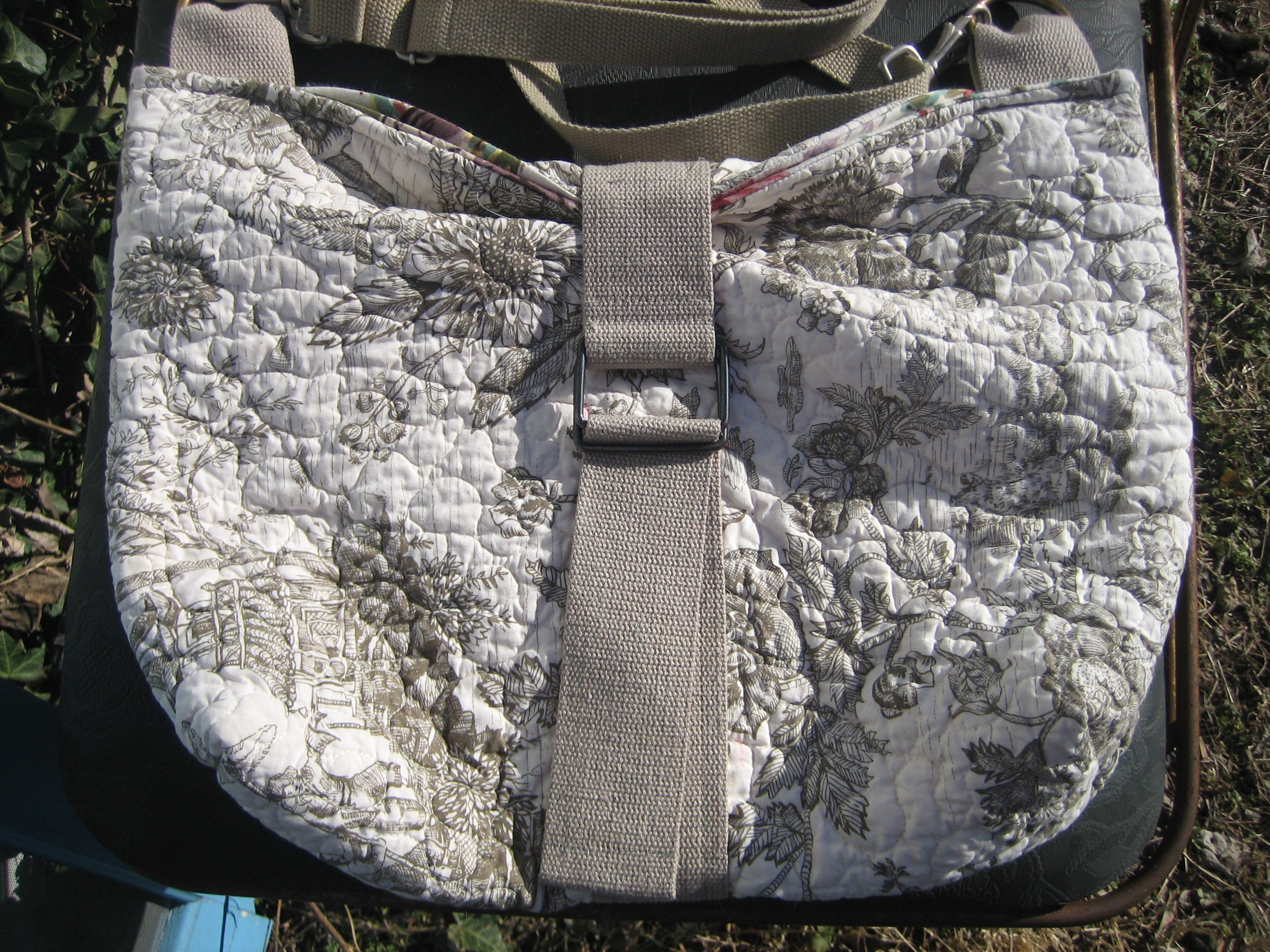
bag 021713 003Purse project

Cheri-Okay, I do have to admit, it was hard. It was really hard to try to top the purse I made last year. It may not be as nice, but it does fill my needs.

Supplies

Sewing machine

2 belts-khaki

pillow sham

fabric

Pillow shams make great purses. The shams are often quilted and they are normally the right size.

Wash and dry the sham, and lay out flat. Cut off the back fabric and lay a coordinating fabric on top. Cut the fabric to fit. Put the fabric and sham right side to right side and sew around the entire sham leaving a small opening so you can turn it right side out.

After you have turned it right side out, put the fabric together again with the right sides together. Sew up each side to make a sack. You could make a tote by just adding handles at this point, but I like to make my bag a bit more interesting.

When I am at sales I have a tendency to pick up webbed belts. Not only is the hardware handy but I like to use the fabric on purses. I took a belt that was wide and sewed it all around the purse. I used the clasp part for the purse closure. I also used what I had cut off to make loops to hold the handle.

In the end I am really pleased with the finished product. I would like to make an organizer to put inside of it. This would make it even more functional.

bag 021713 004

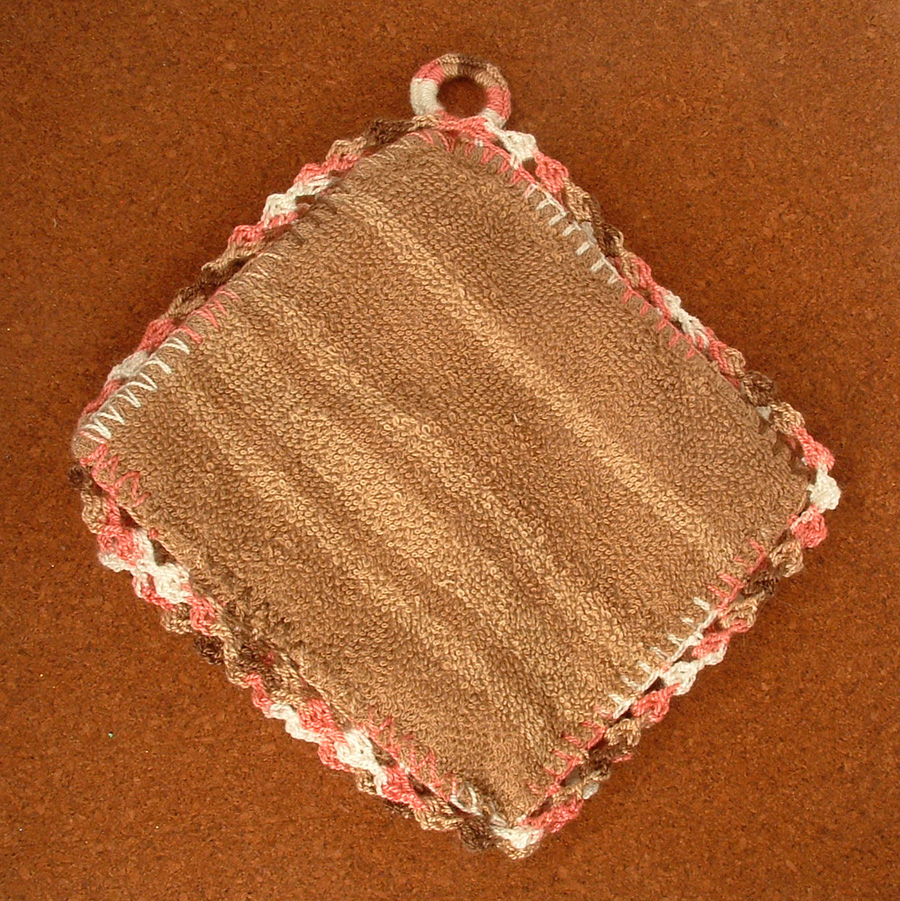
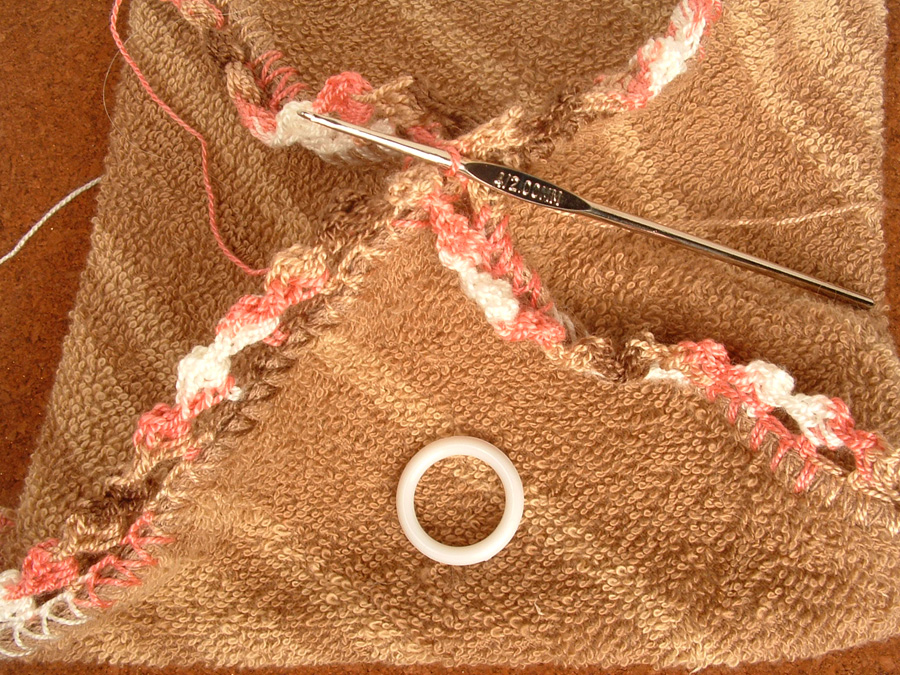
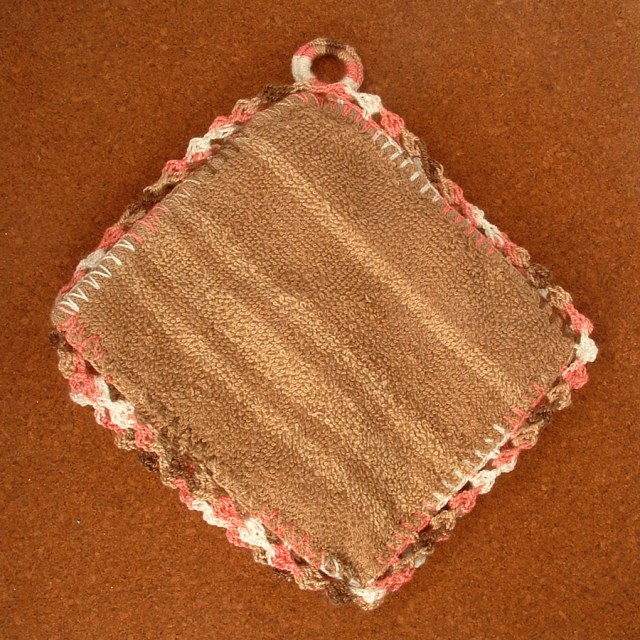
Completed hotpad made from a washcloth and crochet

World’s Best Hot Pads – Made from Washcloths

Completed hotpad made from a washcloth and crochet

This is a very photo heavy how-to to make the best hot pads ever. I learned how to make these from my Aunt Harriet. She wasn’t really my Aunt, she was a friend of my Grandmother’s who the family adopted. Harriet Saine was a wonderful woman and is greatly missed.

Her hot pads are famous in our family. Every year at Christmas she would pull out this gigantic stack of hot pads and every woman (with a house or apartment) would get to pick two. Sometimes Harriet brought so many we would get to chose a third one. When Harriet passed away, I got her supplies for making these hot pads. In her supplies were her crochet hooks. There is one that is completely eroded down to a nub. I had no idea you could even do that to a metal crochet hook. I cannot even begin to create as many of these as Harriet was able to. I am amazed every year I am able to make these for the family that she was able to do this every year for as long as I can remember. This is my homage to Aunt Harriet.
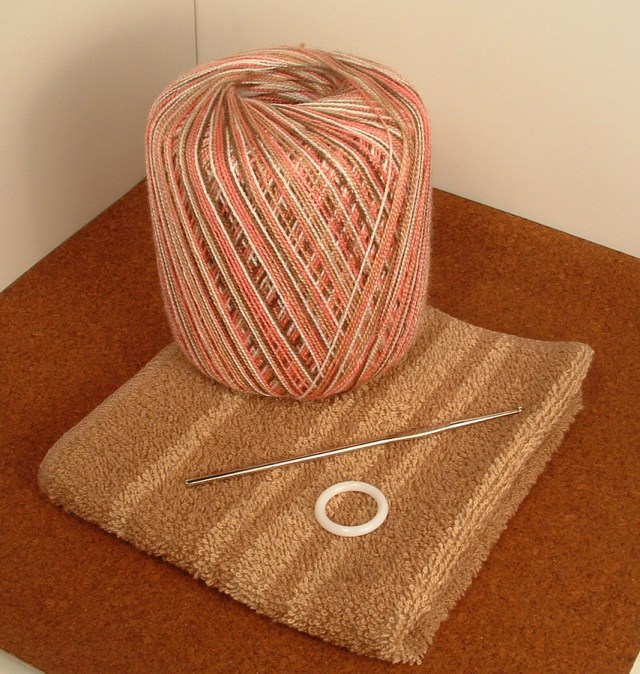
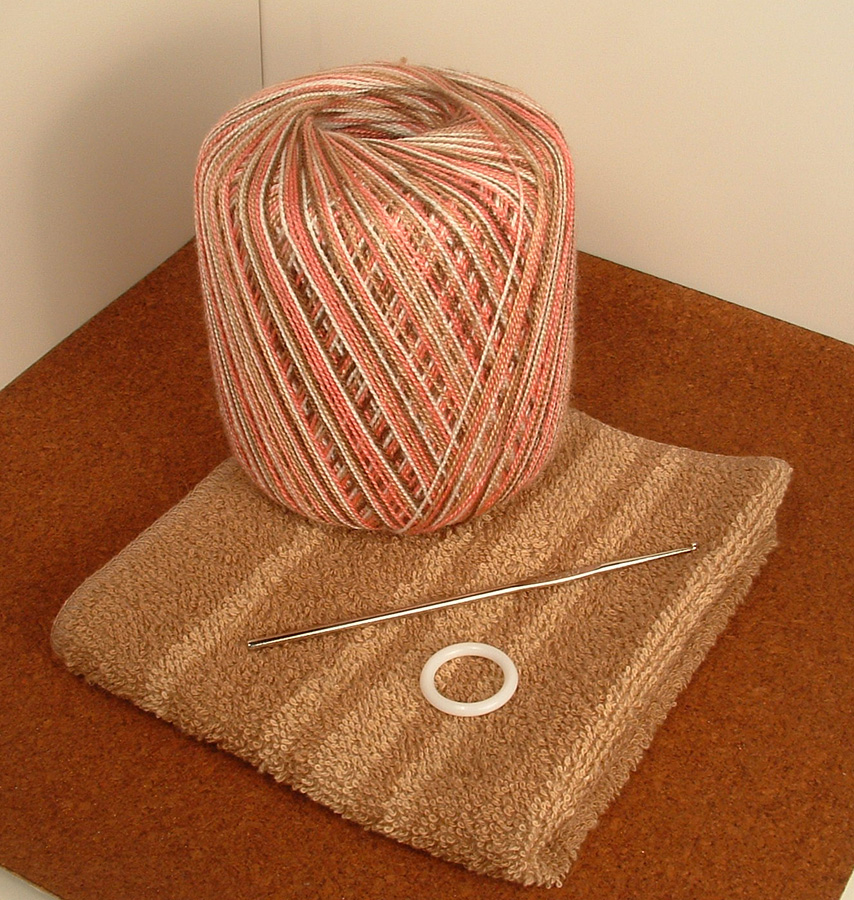
Supplies for the hotpads

The supplies for these hot pads are very few:

Cheap washcloth (this means no embroidered stripes or thick edges)

Crochet thread

1″ plastic rings

Crochet hooks (size 4/2.00mm and size 8/1.50mm)

Pins (optional, though recommended)

Scissors

You really do need to use cheaper washcloths for this project. Cheaper washcloths do not have a high thread count and make it much easier to get the crochet hook through the fabric for the first round of stitching. You also are much better off using plain washcloths, the ones with no embroidered stripes or thick edges. The stripes are very difficult to get a crochet hook through. That is not to say impossible, but it will hurt your hands if you have to force the hook through these stripes very often. I have somehow managed to collect around 50 washcloths to make into hot pads. Eventually, I will have to stop buying them.

The crochet thread can be any sort. I now have a huge collection of thread from variegated, solid, metallic, to threads with differing thickness. I personally prefer the variegated for my hot pads. I really like the effect it makes. I currently have 2 Rubbermaid tubs of crochet thread, and like the washcloths, I may eventually have to stop buying new colors. (I have a bad habit of buying every new variegated skein I find.)

For the plastic rings, you can use any size you prefer, but I tend to buy 3/4″, 1″ or 1 1/4″. I just have to make sure that I grab two of the same size for the set of hot pads (I always make sets of 2).

I use a size 8/1.50mm crochet hook for the first round of stitching and a size 4/2.00mm crochet hook for the decorative round of stitching. The size 8 goes through the fabric of the washcloth much easier and I like a slightly larger hook to make the edging, this is just personal preference though.

To make:

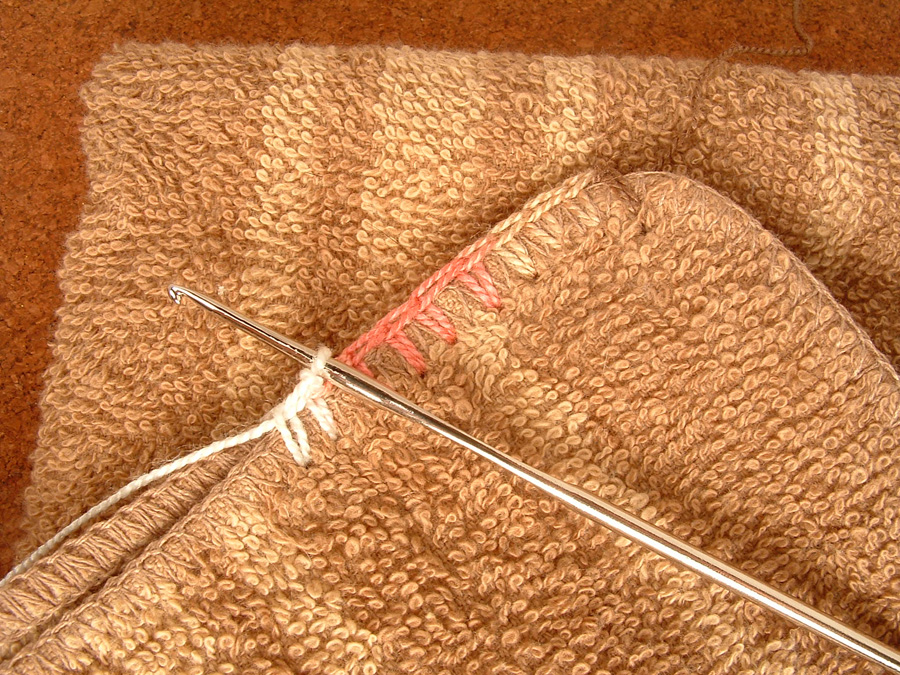
You fold the washcloth in half  and pin it to hold it in place. As you stitch, it tends to drift and you will end up with a lopsided fold. Holding it with the fold closer to you, begin the first single crochet in the upper left hand corner, at the midpoint of the corner.
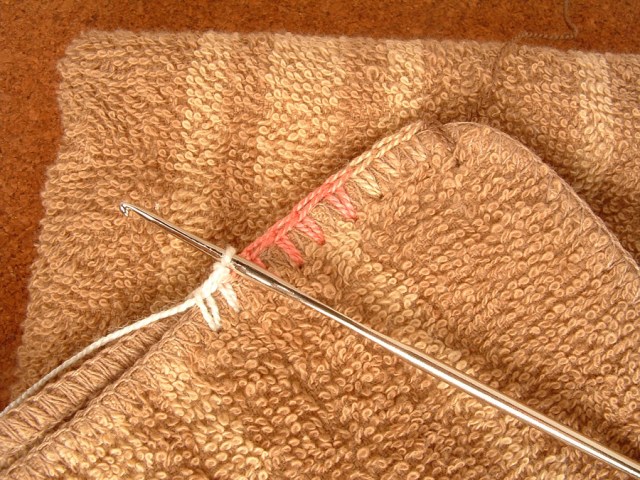
First single crochet stitches

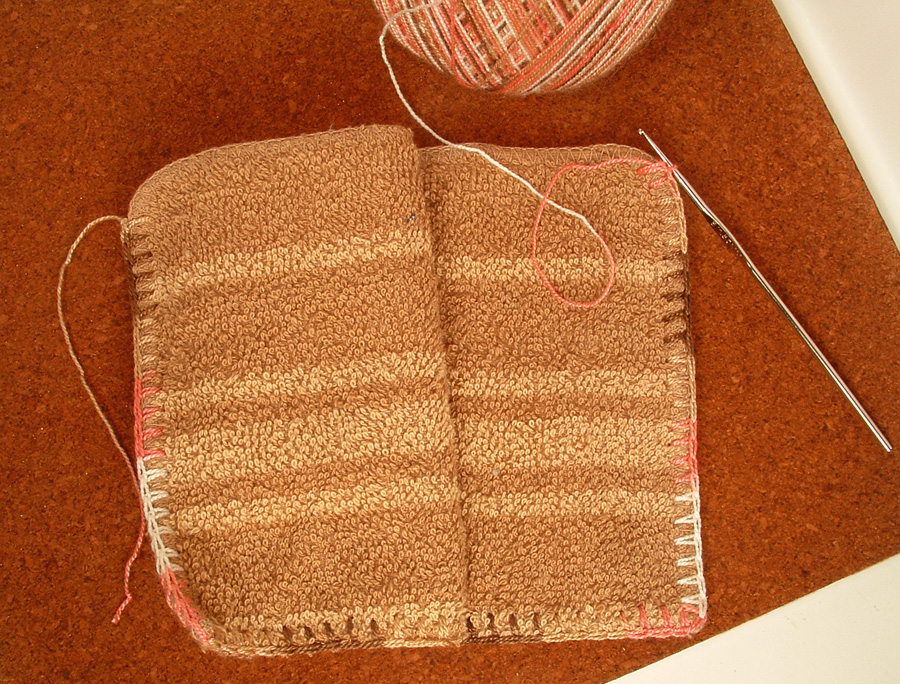
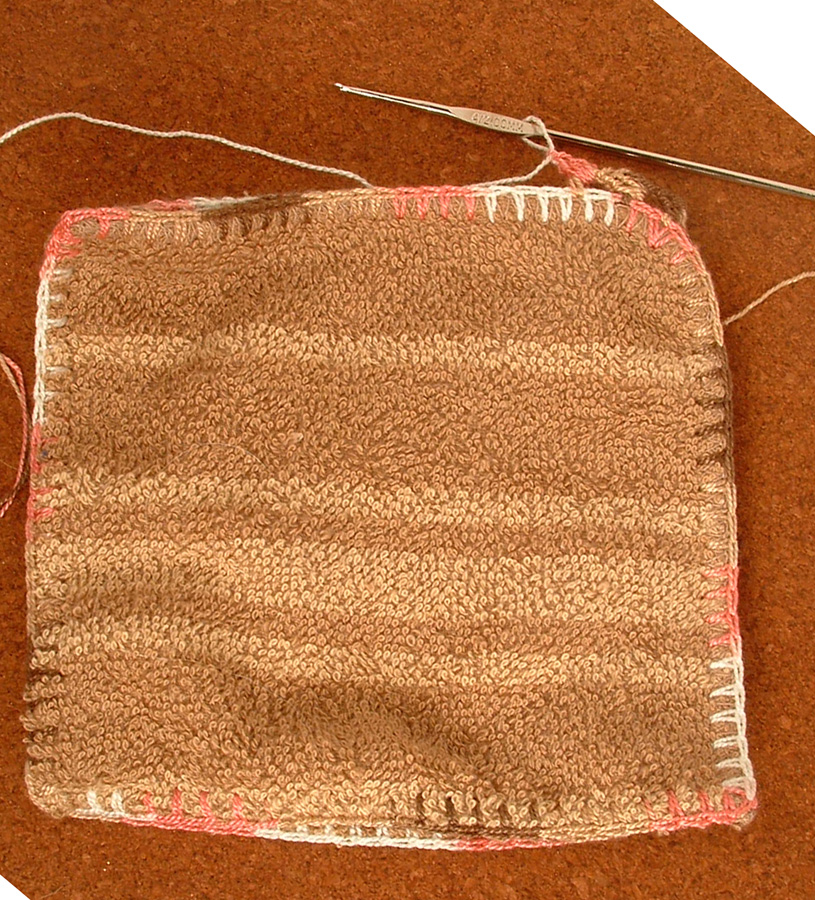
Continue your single crochet stitching around the corner, the first short side, next full corner, and to the folded edge. Keep stitching along the fold, next full corner, and up the second short side of the washcloth. You stop your stitching at the midpoint of the upper right corner. At this point, you have single crocheted around three sides of the washcloth (1/4 of the way finished).

Single crochet around three sides.

Now you need to open up the washcloth and put the two midpoints together (be sure to remove your pins). This makes what in the origami world is called a balloon fold. You connect all four corners of the washcloth at the top of the hot pad and this creates 4 triangle shaped wings. The photo below shows this fold in a flattened view from the top. You can see the four corners of the washcloth stitched together, although in the photo, the edges are not yet completely stitched. Putting a couple of pins into the wings will again help keep your folds straight and prevent you from having a lopsided hot pad.
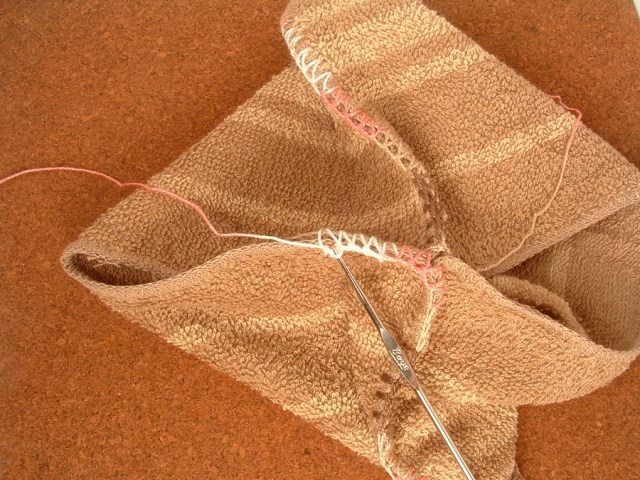
Start of second round of single crochet stitches

You stick your crochet hook through the two pieces of fabric at the midpoints of the corners and start single crocheting down the short side (from here on, all the sides are short sides). Continue around the washcloth (you will stitch over your first round of crochet as you go) until you are again back at the top. This should have closed all the sides and created the 4 wings and top and bottom points (1/2 way finished). You are now ready to start the decorative edging. You can also remove all the pins now.

Here the single crochet is finished and you are ready to start the decorative edging.

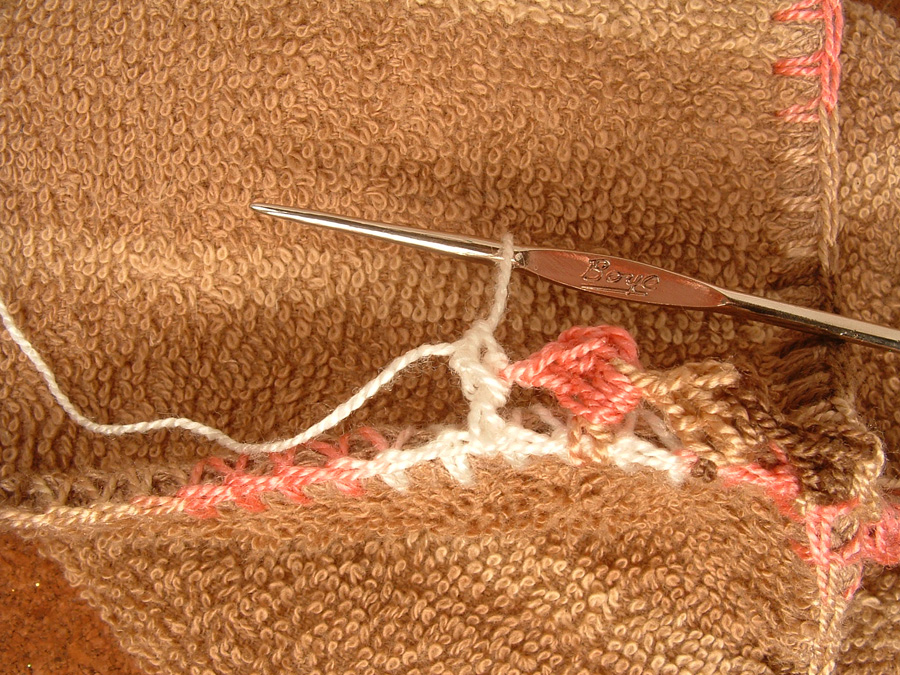
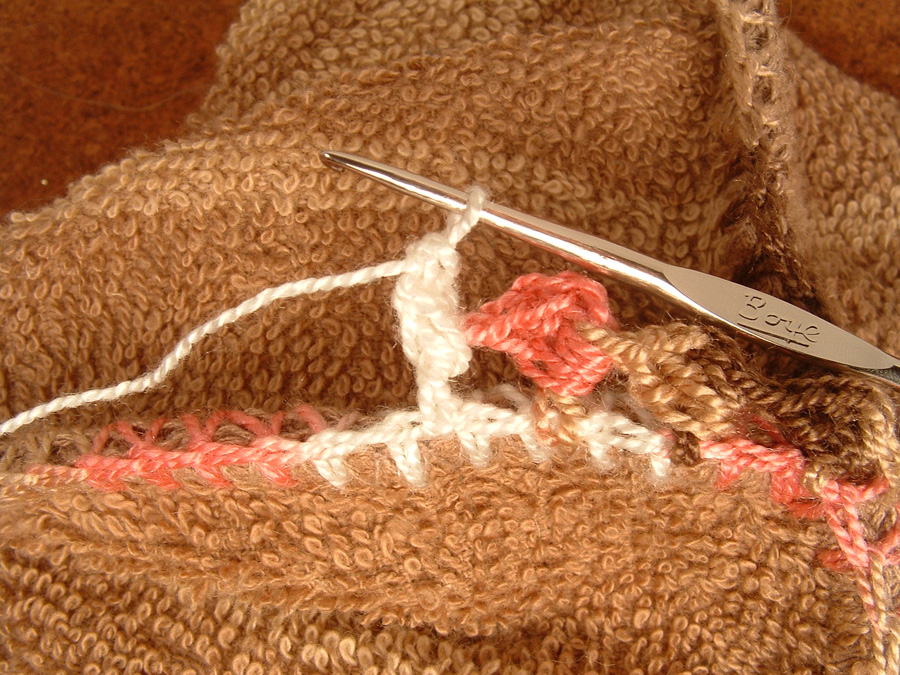
I switch hooks to the larger size 4/2.00mm hook and double crochet at this point. When I started making these hot pads, I used to make different types of edgings. You can experiment until you find one you like. I like this one and it is very easy and pretty. Single crochet twice and insert the hook under the first single crochet on the opposite wing of the hot pad. You will use this stitch as the post to stitch 3 more double crochet stitches around. Finish off with one single crochet. This completes one scallop. You will make one of these scallops in every other single crochet stitch from the first round.

dc in first sc, *dc around first dc 3 times, sc, skip single crochet and dc in next sc, continue from *

Double Crochet post stitch

First of the three DC stitches

Second of three DC stitches

Third of DC stitches

Decorative Edge Finished

Add Ring

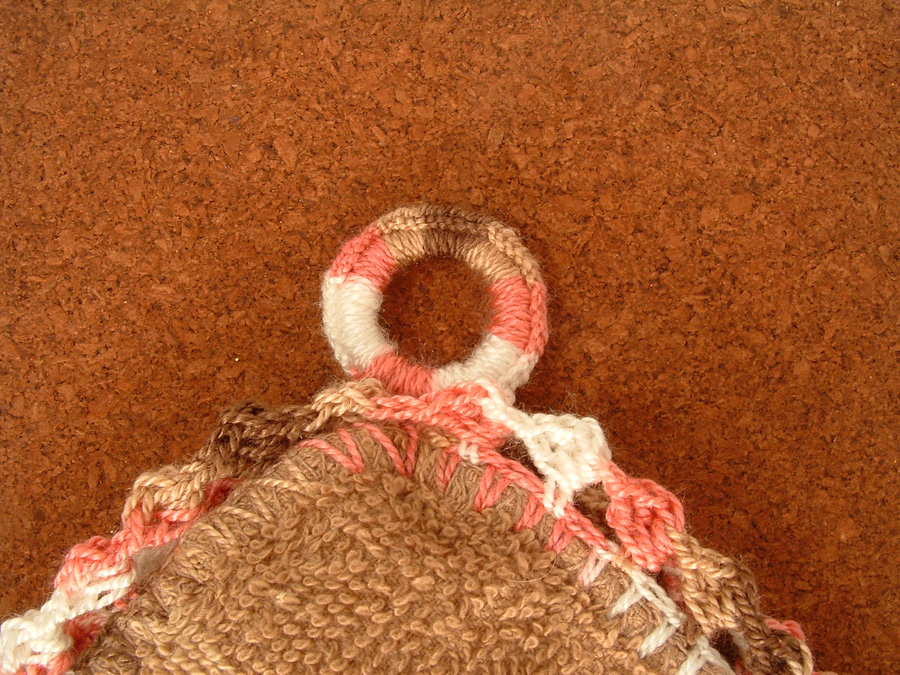
When you finish the edging and are back at the top of the hot pad you will add your plastic ring. You don’t have to add a plastic ring, but so many people like to hang their hot pads from hooks. You can skip this part entirely if you don’t want to hang your hot pads. You single crochet around the ring making sure to completely cover the plastic ring. I finish the ring with one final single crochet back into the hot pad. I tie off the threads and pull the ends inside the hot pad with the crochet hook.

Finished Ring

You have now finished your first hot pad! As I said above, I always make these in pairs and would now start my second one. I can make one hot pad in about an hour (1 and 1/2  if I am interrupted a lot).
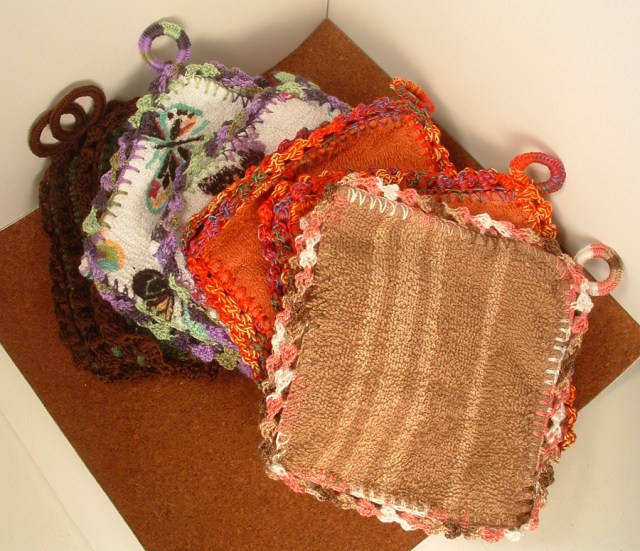
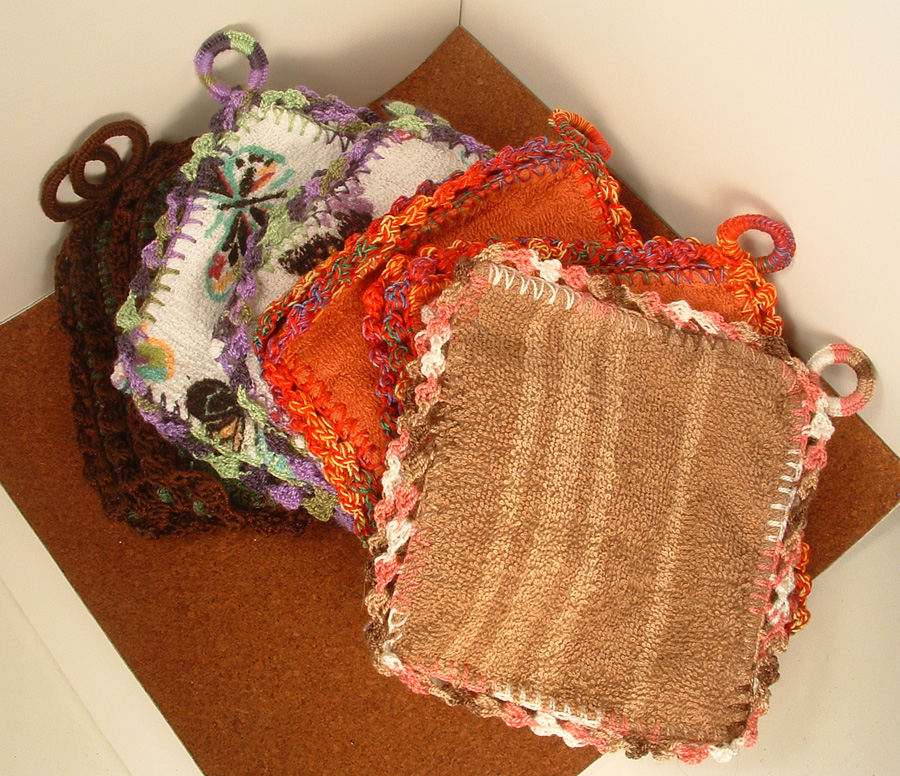
Pile of finished hot pads

I have tried to photo the whole process, but if you have any questions, or want another photo, just let me know. I hope you enjoy these hot pads as much as I and my family do!

Happy Crafting,

Kristin

Finished hot pad

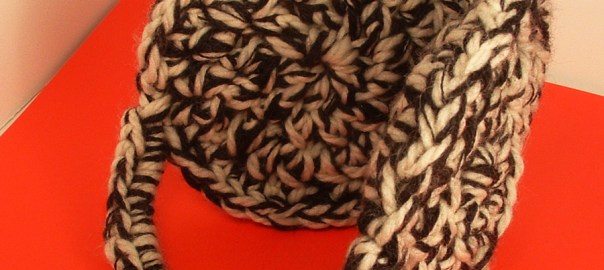
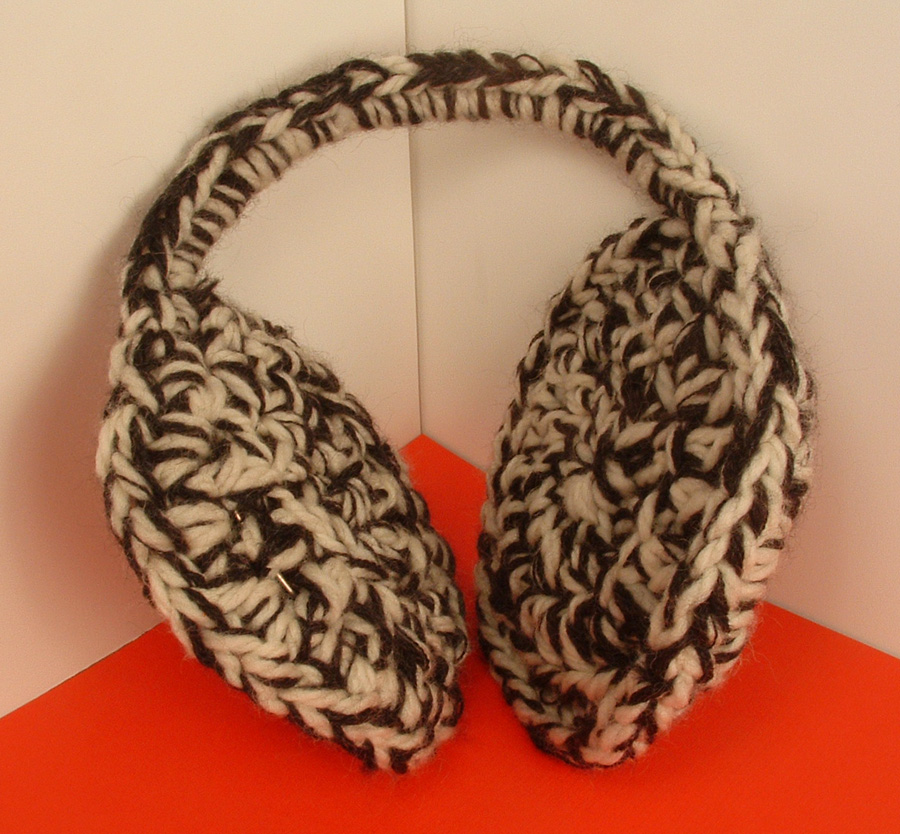
Crocheted earmuffs in cream and black wool yarn.

Crafty Challenge 12: Headwarmer – Earmuffs


Crocheted earmuffs in cream and black wool yarn.

Our most recent crafty challenge was to make a headwarmer. This could be in any color, material, style or shape. Cheri was ahead of us all and posted her adorable recycled sweater hat here. We gave ourselves 3 weeks to make this particular challenge as we were all still recovering from the holidays. I had mine done in less than a week and then had to try very had not to talk about it or brag about it. Of course, this early birdness of me is now completely offset by my late posting.

I love earmuffs, but have never been able to find a satisfactory pair. The never stay on my head or they don’t cover my ears very well. I also hate hats as I have very static prone hair. I knew as soon as we started talking about a headwarmer challenge that earmuffs were my challenge.

I bought a cheap set of fleece wrap-around earmuffs for less than $2. I then cut the fleece off the wire and used the wire for the base of my earmuffs. I have some lovely wool yarn, one skein in cream and another in black. I also received this gigantic spool of very fine black alpaca yarn on year for Christmas. I took all three yarns and crocheted my earmuffs with this lovely and warm combination.

Crocheted earmuffs made on wire frame.

I crocheted 4 circles in double crochet, all the same size and just big enough to cover my ears. I then held two of these circles on either side of the ear part of the wire frame and using half-double crochet, I stitched the circles together. I really wanted the double thickness which provides amazing protection from cold and wind. You could also put some stuffing or quilting in between the two circles if you wanted poofy earmuffs (this would be very cute for a child).

After stitching both circles on the frame, I then single crocheted around the length of wire between the ear pieces. To keep from having to weave-in ends, I folded the ends from the ear pieces under the single crochet. This made the back wire a little thicker and made it so I only had the ends from this last stretch to weave-in.

Crocheted earmuffs in black and cream wool yarn.

This completed my earmuffs. This project took me all of about 2 hours and most of that was just figuring out what stitch I wanted to use to make the circles. I have been wearing these for weeks now and just love them. They are comfortable, very warm, and I haven’t had cold ears at all this year!

Happy Crafting!

Kristin

Headwarmer challenge

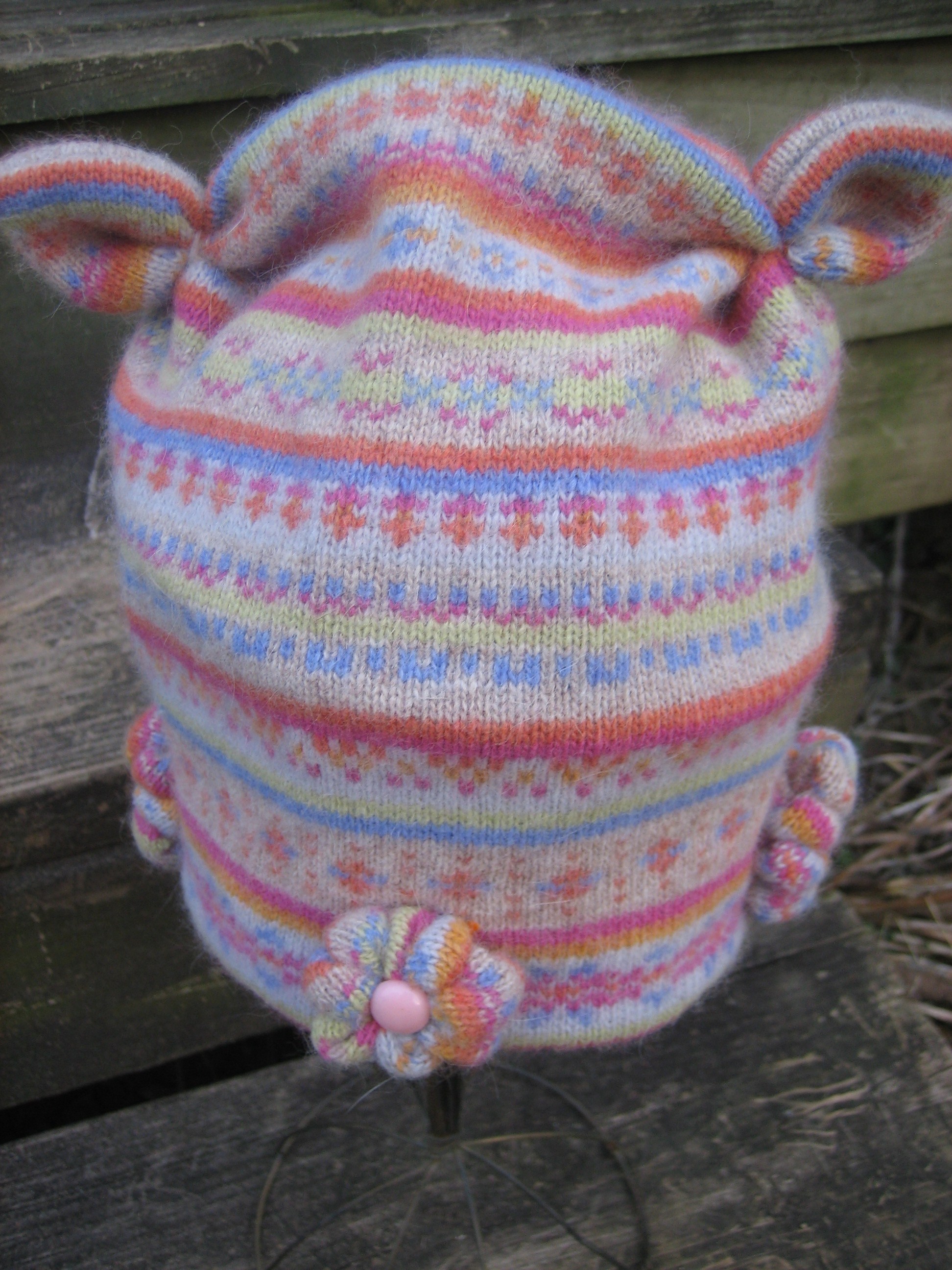
Hat from a sweater.

Supplies:

Sweater- I found a beautiful wool sweater at Goodwill for under $2.00. Stripes make measuring easier

Scissors

Ruler

Sewing machine

Embroidery needle and floss

Lay out the sweater and cut all the seams. This will give you a good idea of how much fabric you have to work with. Fold the fabric over in to an inside out rectangle. Sew along the top and the back. This will give you a tube that is closed at one end.

Turn right side out and grab the two corners at the top of the hat. Sew through the triangles created and then tie your thread very tight. This will give you some very cute kitty ears.

Turn up the hem and tack in several places with needle and embroidery floss. I made several knots all the way around.

Flowers

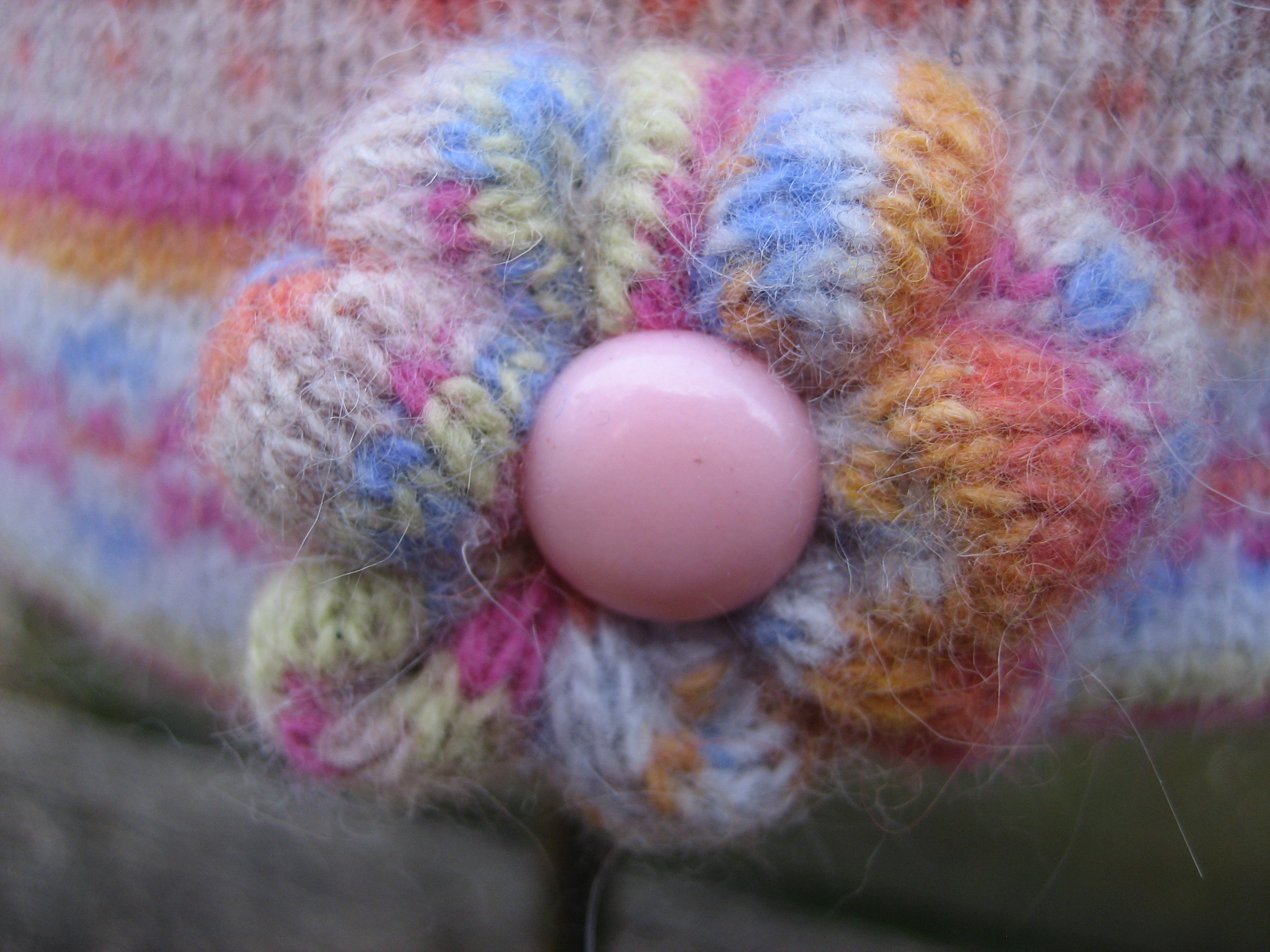
Place a cup on the wrong side of the fabric and mark with a marker. Cut out the circles. Embroider a running stitch around the outside of the circle. Gather it up, this makes a yo-yo. Run a stitch around the outside of the yo-yo and pull tight to make the flower petals. Do this 8 times or the number of petals you would like. Sew a button in the center to make a center.

Attach the flowers evenly around the outside of the hat.

And there you go, a beautiful, unique and very warm hat that any little kitty/flower girl would love.

hat 009

Completed hat

hat 006

Close up of flowers


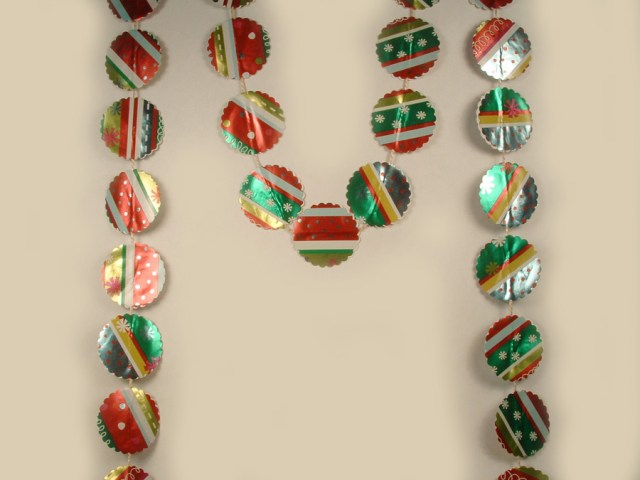
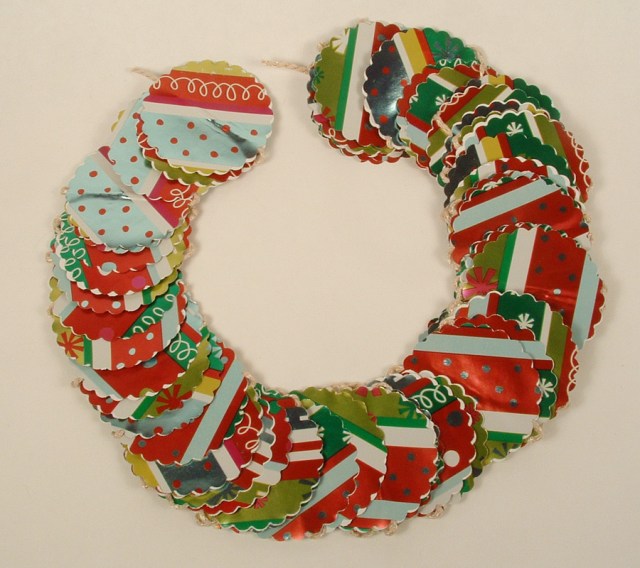
Christmas garland made of wrapping paper.

Ornament Advent: Day 23 Christmas Wrap Garland

One of the greatest benefits of having a crafting family are how ideas are bounced, re-imaged, and re-shaped among us. I really love the Star Ornaments that Loryn made and I also just love the Chinese Fortune Garland that Cheri made. I decided to do something similar to Loryn’s stars and follow Cheri and make a garland. I am very happy with how it turned out!

Christmas garland made of wrapping paper.

Supplies:

Christmas wrap

Paper punch (I used 2″ seal punch)

Glue stick or pen

Yarn, string, or ribbon

Christmas garland made of Christmas wrap and shaped into a wreath.

I had some really shiny Christmas wrap and also had this 2″ seal paper punch. I used the paper punch to cut around 120 pieces out of the Christmas wrap. I then pulled out some thick crochet thread that is a sort-of soft gold color and is ribbonish (flat and about 1/8″ thick). I spread glue on two cut-outs and glued the crochet thread between the two pieces. You do have to be sparing with the glue as the Christmas wrap is very thin. I left around 1/4″ of the yarn visible between the cut-outs.

Christmas Wrapping Paper Garland

My garland is around 12′ long and looks great on a tree! I think this whole garland took me around 45 minutes to make. The other nice thing about this garland is that once you fold up the shapes, it takes up so little space and stores very well.

Christmas Garland made of wrapping paper.

Happy Holidays and Happy Crafting!

Kristin

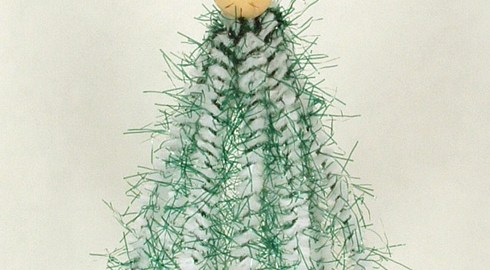
Christmas tree ornament made of chenille pipe cleaners.

Ornament Advent: Day 19 Chenille Tree

I knew from the beginning that I would just have to make a tree ornament for this Christmas advent. I have had one in mind, but I had no idea to execute it. I watched Loryn’s and Cheri’s tree ornaments get posted and loved each of them. My goal was to keep the ornament very simple and easy to make. This whole ornament probably took me about 30 minutes and I was Google Talking (can I use that that way?) with Mom which slows me down as we each share what we are project we are working on.
Christmas tree ornament made of chenille pipe cleaners.

I used chenille pipe cleaners, cut in half, then wrapped candy cane style for the form of my tree. I know I keep mentioning temari lately, but I have a ton of supplies leftover and so I used some really cool fuzzy green thread from my temari stash to wrap around the chenille pipe cleaners. I really liked how the fuzzy thread looks like the needles on a pine tree. I tied the ends of the thread and glued my knots to ensure that they wouldn’t come loose.

Christmas tree ornament made of pipe cleaners.

I grabbed all the thread wrapped pipe cleaners in one group. ran some silver wire down the middle, and approximately 1″ in on the pipe cleaners, wrapped the silver wire around the group to hold it together. Then I bent all the wires down over the silver wrapping so that just the wire stuck out the top. I used this bit of wire to string the wooden star bead and make the loop for the hanger. At this point, it you didn’t put the hanger on the ornament, it actually looks really cool just as a decoration for your table, although I would recommend putting something under it as the pipe cleaners are a bit scratchy.

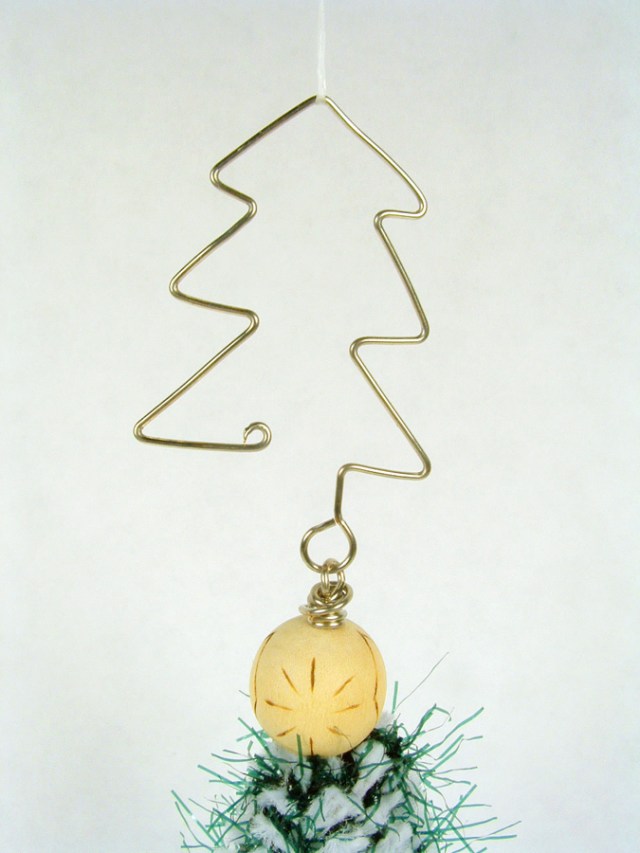
Ornament hook made to look like a Christmas tree.

I love the hanger I made for this ornament. Whoever said that you needed to have plain hooks for your ornaments? I made the hanger out of more silver wire, just bending it into shape and curling the end so you didn’t poke yourself with it.

Ornament hook made of wire to look like a Christmas tree.

Happy crafting!

Kristin

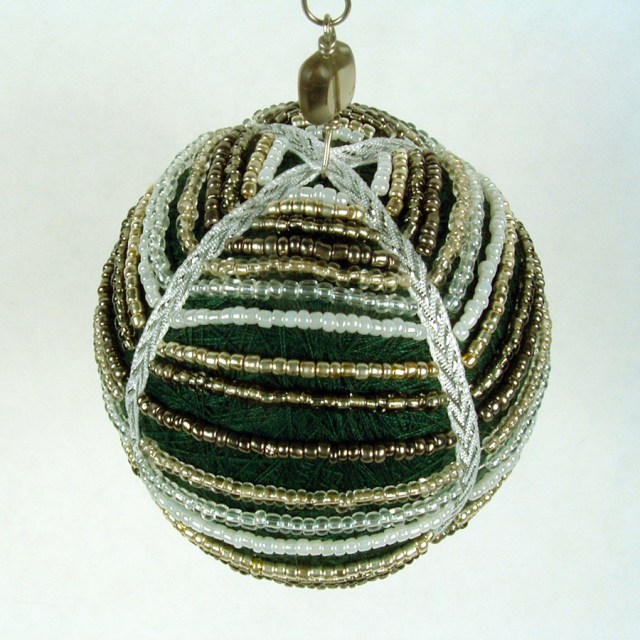
Thread ball draped with glass seed beads sewn into ribbon.

Ornament Advent: Day 15 Beaded Ball

Gonna Go Back in Time!

Thread ball draped with seed beads

So, I was not feeling at all well this weekend and missed my Saturday post for the Ornament Advent. To make up for it, I decided to splurge and make a slightly more difficult ornament. For this ornament, I once again raided my temari ball stash and used one of the green balls for the base. It is around 3″ in diameter. I then wrapped the ribbon around the ball tacking it down first with pins and then with basting stitches.

Thread ball draped with glass seed beads sewn into ribbon.

The beads are from the giant spinner of seed beads that Mom and I bought to take with us when we went camping (yes, we like to craft while camping). I strung the beads and crossed under the ribbon, trying to make a slight draping effect while doing so. It was interesting how much heavier the ball got by the time I was finished. All those glass beads weigh more than you would think.
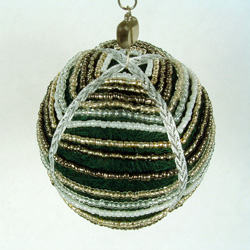
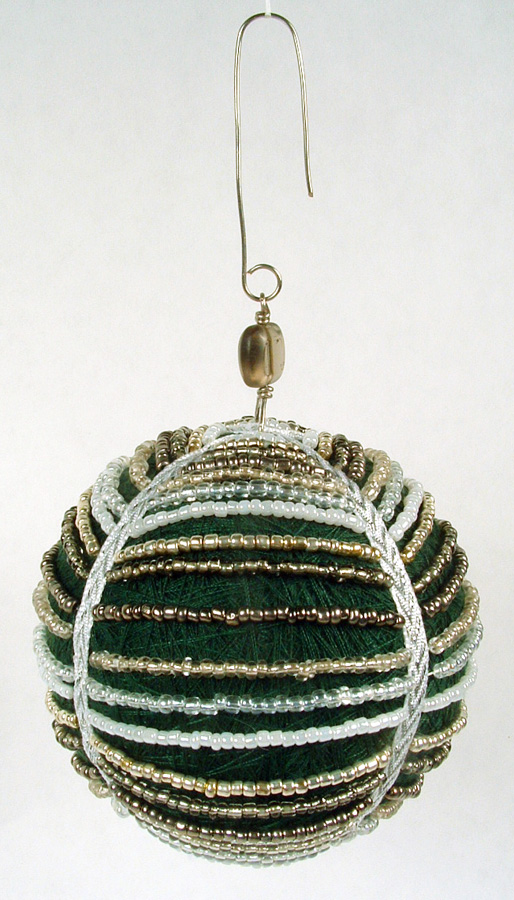
Green thread ball draped with stands of seed beads.

I then decided that I needed a bead topper and found a lovely smoky gray glass bead in my oddments and leftovers drawer that looks great. I made the hook and I was ready to go.

Green thread ball draped with seed beads.

I am really pleased with how this one turned out.

Happy Crafting,

Kristin

Ornament Advent: Day 18 Fortune Cookie Garland

Save your fortunes and make this holiday garland.

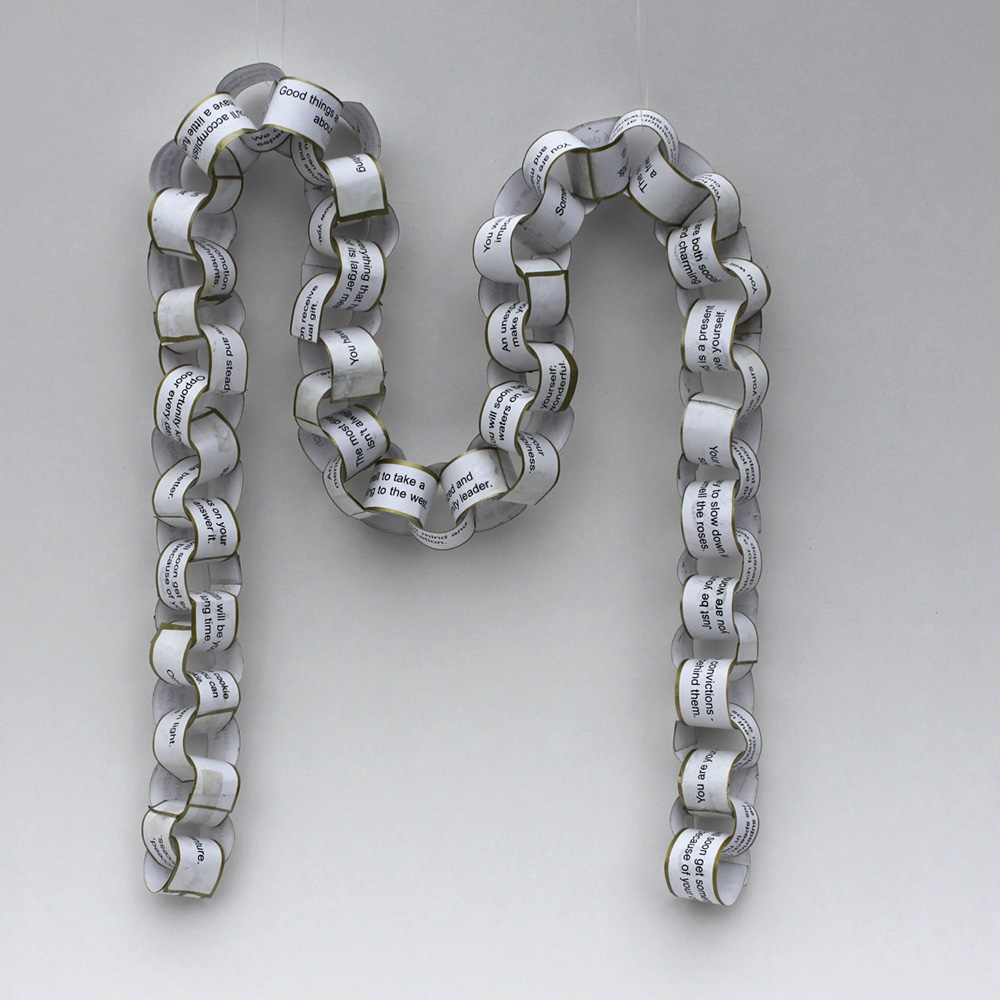
Cheri: My boys and I try to keep a standing date on Saturdays. We like to go and have lunch at a Chinese Restaurant in the small town where we live. I keep the fortunes as a keepsake. This is one of my favorite projects to make with them.

Supplies:

Fortune Cookie Fortunes

Glue or tape

Gold marker

How to:

Color a line around the slips with gold marker to dress it up a bit, and then glue/tape the fortunes into a circle, (make sure the fortune is on the outside). Attach them together and you have a great chain for the Christmas tree. I plan on continuing the chain throughout the year. Merry Christmas!

Fortune Cookie Garland

origami, ornament, Christmas, homemade, How to, DIY, star, paper

Ornament Advent: Day 16 Origami Star

origami, ornament, Christmas, homemade, How to, DIY, star, paper
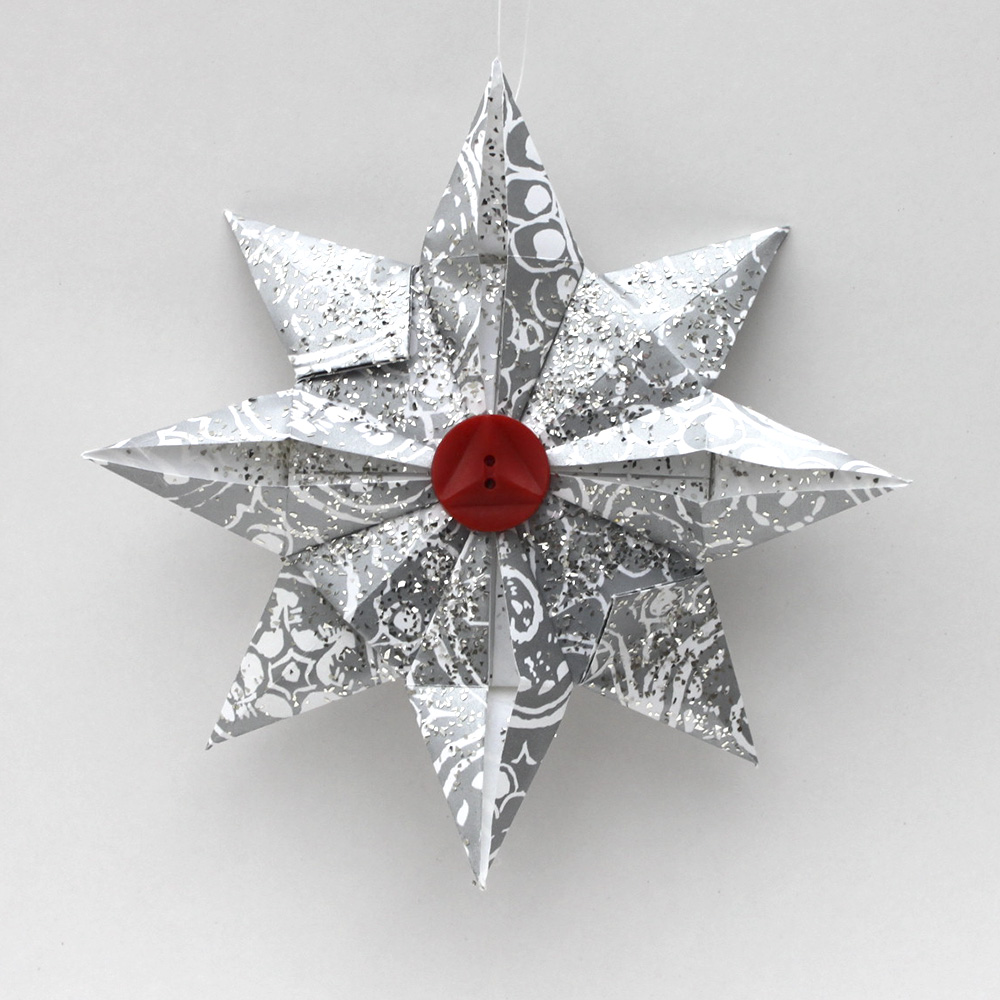
Origami star ornament made from scraps of wrapping paper.


Lynne: I was hoping that since we had Teri Partridge as a guest author today with the Champagne Cork Angel, I would not be required to have an ornament. After some discussion about fair shares and obligations, here is my ornament.

While I was cruising the net this morning for an idea for our Ornament Advent, I found an origami Christmas Star that used wrapping paper scraps. Since most of my wrapping for Christmas is done, I have lots of small pieces of paper lying around and was eager to try it.

You will need 2, 6 x 6 inch squares of wrapping paper and this tutorial by Nikki, in Stitches. And that’s it. These are the clearest directions I’ve seen for origami folding and I was able to make 2 of these ornaments in about 30 minutes.

Once I was done with the origami figure, I added glitter and then hot-glued some vintage buttons to the front and back. I had these buttons stashed in a jar, but you could use whatever you have on hand. I added some fishing line to hang the star and marked off another day on the calendar.


origamistargawker2


Ornament Advent: Day 12 Wire and Fabric Scrap Puppy

christmaspuppylynne1

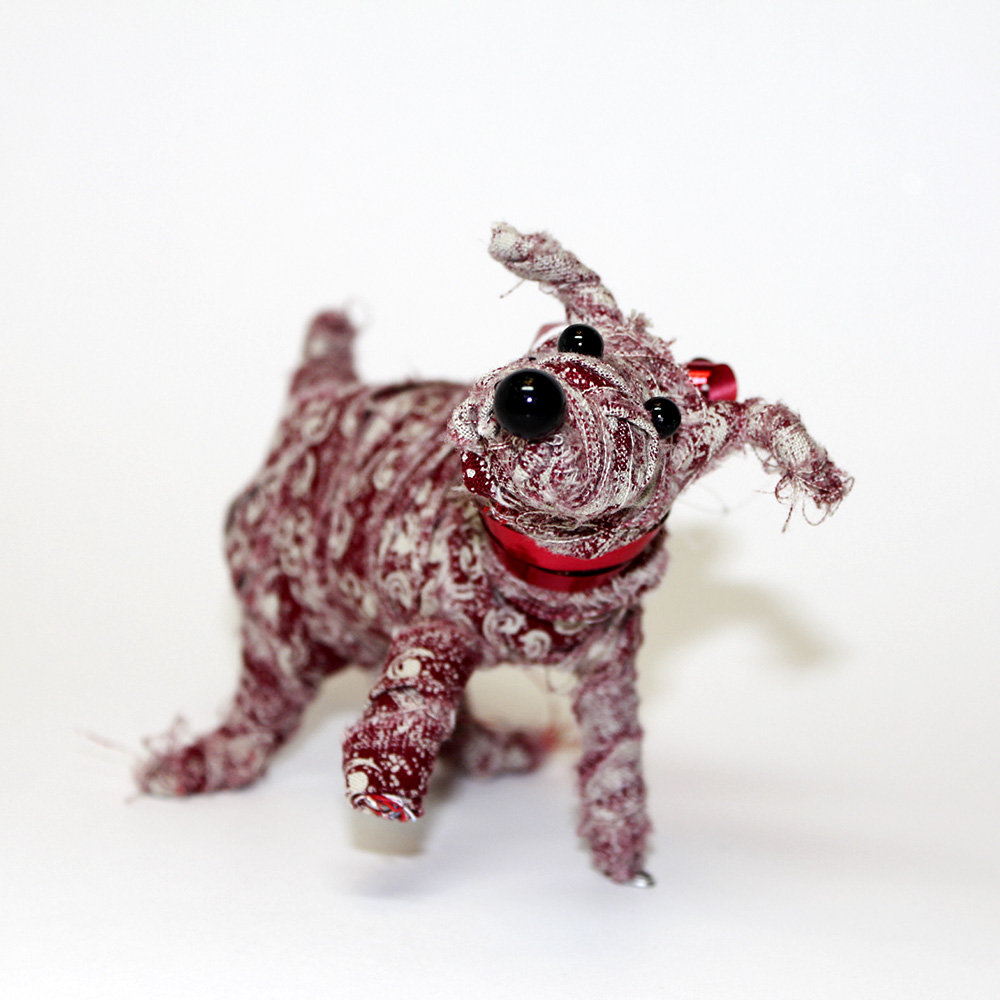
Lynne: I made this ornament “Puppy Under the Christmas Tree” from a wire armature stuffed with fabric scraps and then covered the figure with more fabric strips to get the finished shape.

I had so much fun doing this ornament. I love wire armature figures but I was sure that I could never make one. However I happened to see a book by Carla Sonheim called Drawing and Painting Imaginary Animals and found a photo of a figure done with wire and fabric. I draw my own imaginary animals called Squiggles and I told myself to make a figure just like I drew a squiggle. And it worked.

I used ordinary, hardware store galvanized wire (a gauge soft enough to work with your hands) to make the armature. One long piece made up the legs, body and tail. I used a shorter piece to shape the head and ears. I had to add more volume to the body and head to hold the fabric stuffing so I wired on some spiral shapes. Just keep adding and shaping, until you’re satisfied.

Then I stuffed and covered the armature with torn fabric scraps. Their frayed edges look like fur and give the ornament a vintage look. I used strips 1/4 inch to 1/2 inch wide and about 8 inches long. The strips need to be narrow to follow the contours of the body without sagging open in a curve. If I needed longer strips I just tied two or three of the shorter strips together. The knots disappear into the wrapped fabric. I did not use any glue or stitching to hold the strips on. I used scissors to poke the ends under the previous strips and tried to make sure loose ends were started and finished in  places that would be covered over. Small scissors are perfect for stuffing the ends under earlier layers.
I had old hat pins in my stash and I used them for the eyes and ears, but you could use buttons or embroidery. I used a small scrap of Christmas ribbon to make the collar and bow and fishing line to make an ornament loop, but I have to warn you that one look in those puppy eyes and it will be very difficult to stick the needle and fishing line through.

I’m keeping this puppy out of the ornament box after Christmas. He’s going to sit on the table right beside my favorite chair.

christmaspuppylynneback

t

christmaspuppylynnegawker