Vast place, light bulbs, closed sky, hard grass
under the dome of an oil drum,
we watched Giants in Colt kingdom
force the Pats to drop their last pass.
-Lynne
Vast place, light bulbs, closed sky, hard grass
under the dome of an oil drum,
we watched Giants in Colt kingdom
force the Pats to drop their last pass.
-Lynne
One of my favorite websites to peruse is craftgawker. It is an excellent site to get ideas for art and crafting. A few weeks ago, there were these wonderful felt dolls. I absolutely loved them and decided that I would make some for my niece (this will be a whole other post so stay tuned, and man did I have fun with this whole project). This led me to what I would make for my nephew. He is the youngest and I decided that I would make a felt farm!
First, I needed some animal shapes. I couldn’t find anything online that I liked. Everything was either too simple or not cartoony enough. I ended up on Google Images looking at photos of real animals and drew my own.
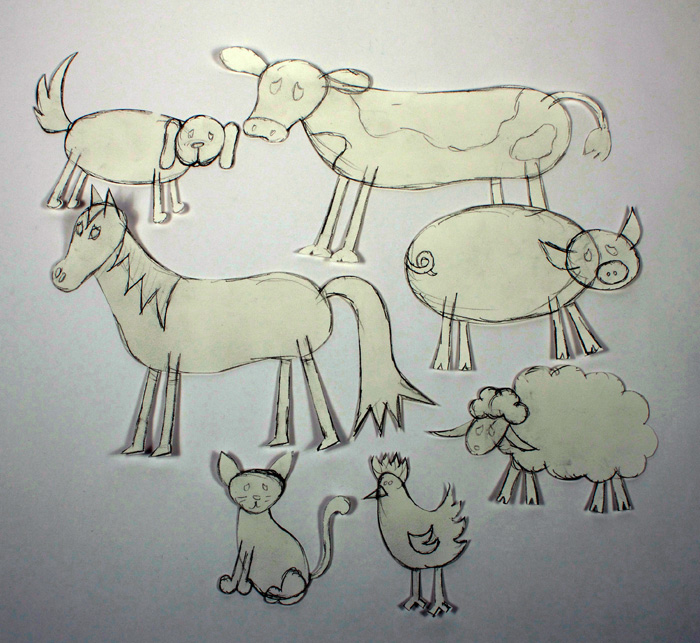
This was so much fun and I actually had to stop myself from making more. If these are a success as a toy, I have lots of additions to make (goats, baby animals, ducks, mice, birds, and so much more).
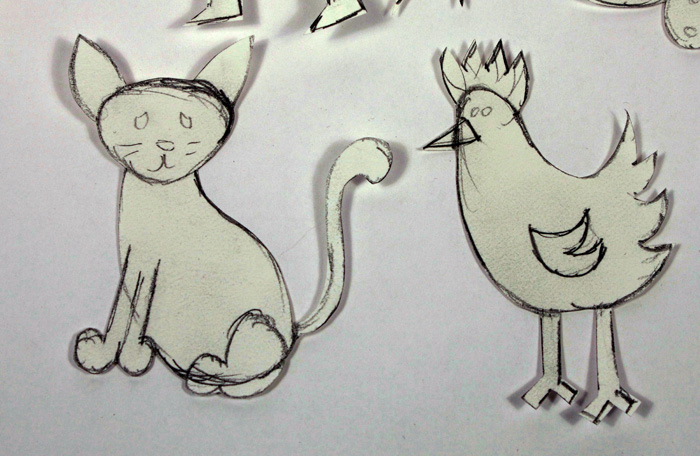
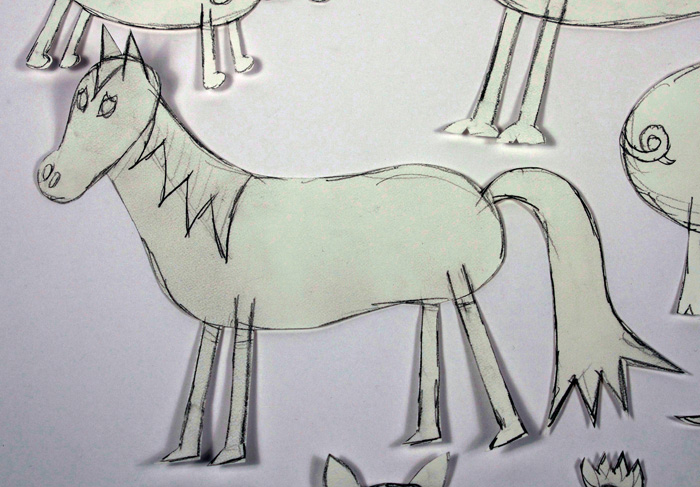
There is also going to be a barn, tractor, trees, some fencing, bales of hay and water troughs (and again, more farm equipment if these are a kid approved toy, one of the other Crafty Sisters suggested a wind mill, wouldn’t that just be awesome?).

I have this really silly tendency to giggle (sort of a cross between a giggle and a mad cackle) when I am particularly happy about a project that I am working on, and this was practically a non-stop giggle project. I think I kept Lynne really entertained during our Google Chats while I made them. I really have had so much fun creating these that I need some more kids to make them for.
And here is the first set of animals that I made in felt. The chickens are dangerous, let me tell you. I made the white one at the top first, and from there, they just got addicting and I just kept giggling and they just kept multiplying. The next thing I knew, there were ten chickens. So, there is a good sized flock of chickens to go with my felt farm now.
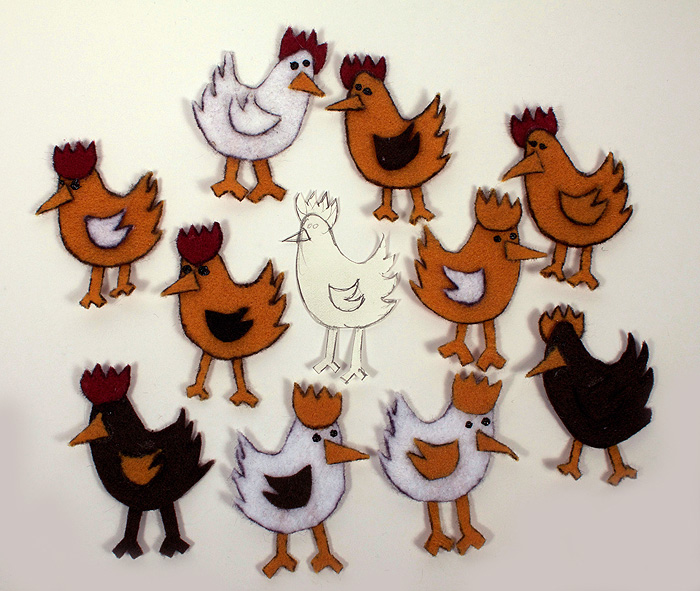
Please don’t worry. There will be detailed instructions, photographs and a printable PDF of the animals in my next post about the felt farm so you can make your own. This is, in a sense, a teaser trailer to the rest of the project just to show some of what I have been working on lately.
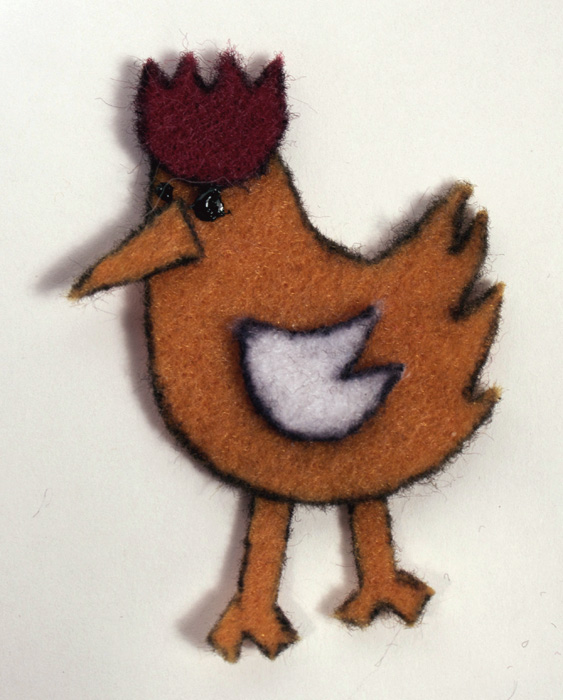
Those chickens really are just so adorable, but wait until you see the felt sheep.
And the felt cat.
And the felt cow.
Okay, like I said, the whole felt farm is just way too cute. Keep an eye out for a giggling madwoman the next time you are in Michael’s. It might just be me.
Happy crafting,
Kristin

Loryn: If you’d like to be able to create a simple bag or purse pattern in any size you want, this tutorial is for you. I created the pattern to make a set of grocery bags, but you can make them any size you want! The grocery bags are a nice place to get started, though, because they are unlined, with a simple handle, and even if they’re not perfect, they’ll still eliminate the need for a plastic bag! I’ll go over bag assembly in a second post, and I’ll show a gallery of design changes you can make in a third post.
To get started, you’ll need:

The first step is to determine how wide you want your bag to be across the top (this shape is narrower at the bottom). I decided on 14″ for my grocery bag. Then, determine how tall you want it to be. This bag will be 12″.
Once you’ve decided on the size, draw a rectangle the width and height of your bag. Mine above is 14″ by 12″. Leave room on all four sides for seam allowances and hems, which we’ll add later.

The next step is to determine the depth (width across) of your bag. Add a second rectangle that is half the size of your desired depth. I want my bag to be 6″ deep, so I added a 3″ rectangle onto the bottom of the first rectangle. If you want a 4″ bag, add 2″, etc.
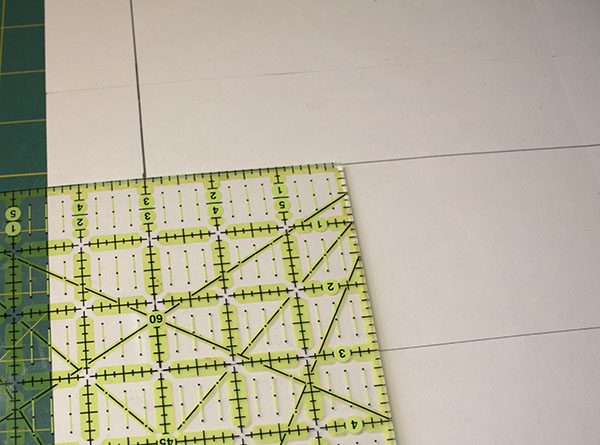
Next, you’ll mark out the corners that will be cut off. The size of the corner is a square, the same size as half the depth of your bag. Since I added a 3″ rectangle, I’ll mark out a 3″ square on each side.
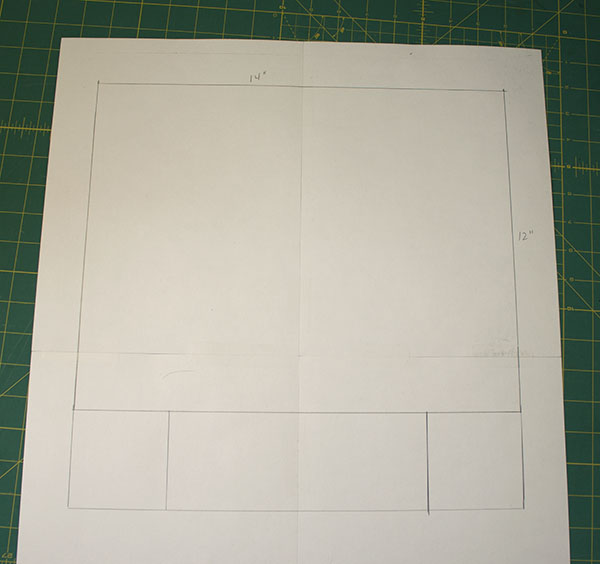
The two outside corners will be cut off. You can achieve a similar result by making a bag the size of the total rectangle, and then sewing across each corner. I prefer this method because it is much more precise and it makes it easier to make your corners exactly the same size.
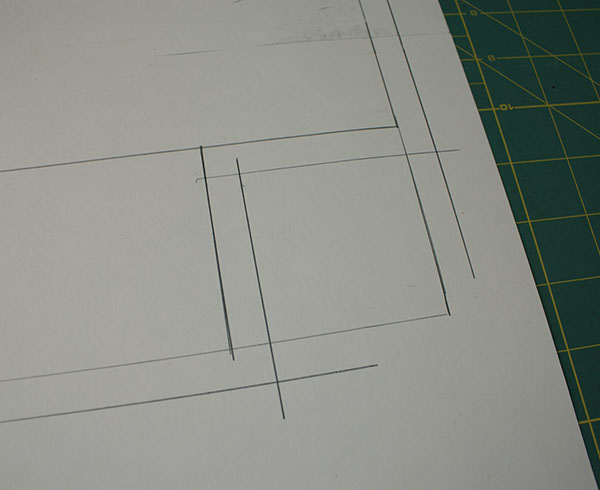
Next, you’ll add seam allowances. The translucent quilting ruler makes this easier. I added 1/2″ seam allowances, and the size will depend on your seam finish. In part 2 of this series, I’ll use french seams to assemble the bag. You might want to add 3/4″ seam allowances if you plan to use this finish. I also added only 1/2″ to the top of the bag. I recommend adding more for a hem allowance, at least 1″.
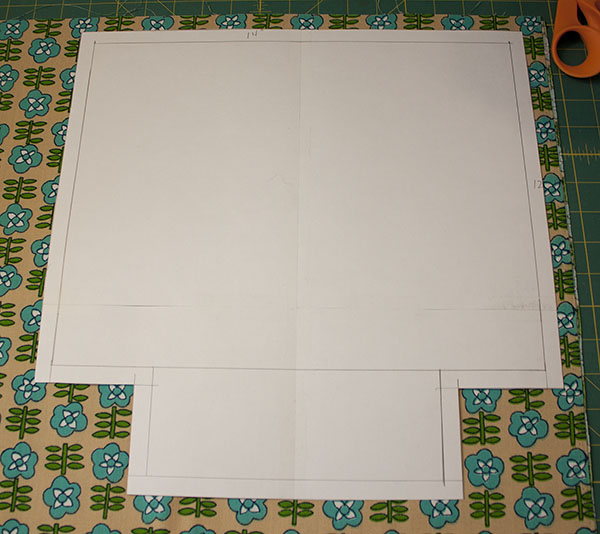
Now you’re ready to cut your pattern out and prepare to cut your fabric! I’ll go through bag assembly in part 2 later this week.
After I assembled my first bag, I discovered that 14″ really is not wide enough for a grocery bag. I measured one of my plastic ones and discovered that they are more like 18″ wide. Luckily, there is a simple way to add width to the pattern without starting from scratch. Just cut it in half like this:
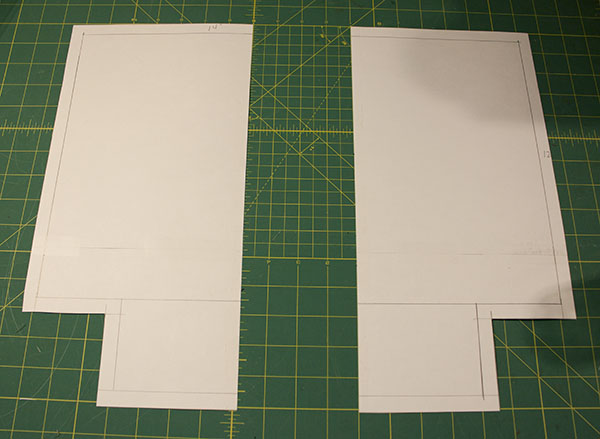
Then add more paper in between to get the size that you want.
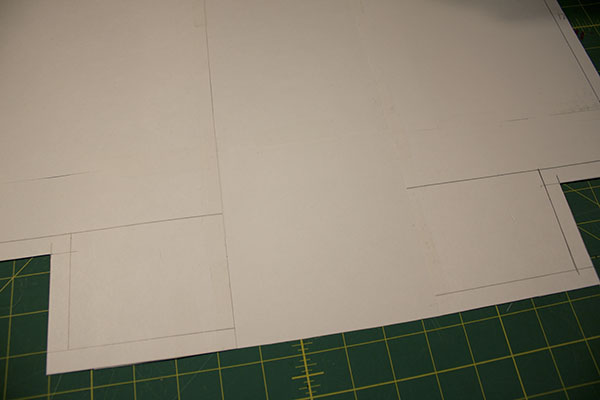
Now you’re ready to cut out the larger pattern.
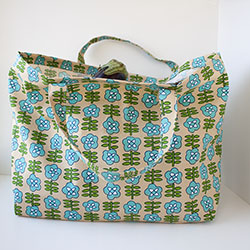
For the grocery bags, I made a simple handle from a 20″ by 4″ wide strip, two for each bag. I made one 14″ bag, and three 18″ bags. The smaller bag is perfect for holding the other three when they’re not in use, and it’s also nice for trips when I only pick up one or two things.
I’ll be doing a second post on how to assemble the bags and a third post on all the different designs you can make from one pattern. Check back early next week for more!
–Loryn


Over the holidays, I visited Half Price Books with a specific project in mind. I wanted to make rolled paper beads. To do this, I needed a coffee table art book. (Yes, I, the bibliophile, was planning to desecrate a book.) My favorite artists are Picasso, Modigliani and Matisse and I was able to find a lovely Matisse art book. Flipping through it, I was able to find a couple of images that I liked. I ended up choosing Plum Blossoms, Green Background, 1948. It is a lovely painting and has these reds and greens that would show up really well in my beads.
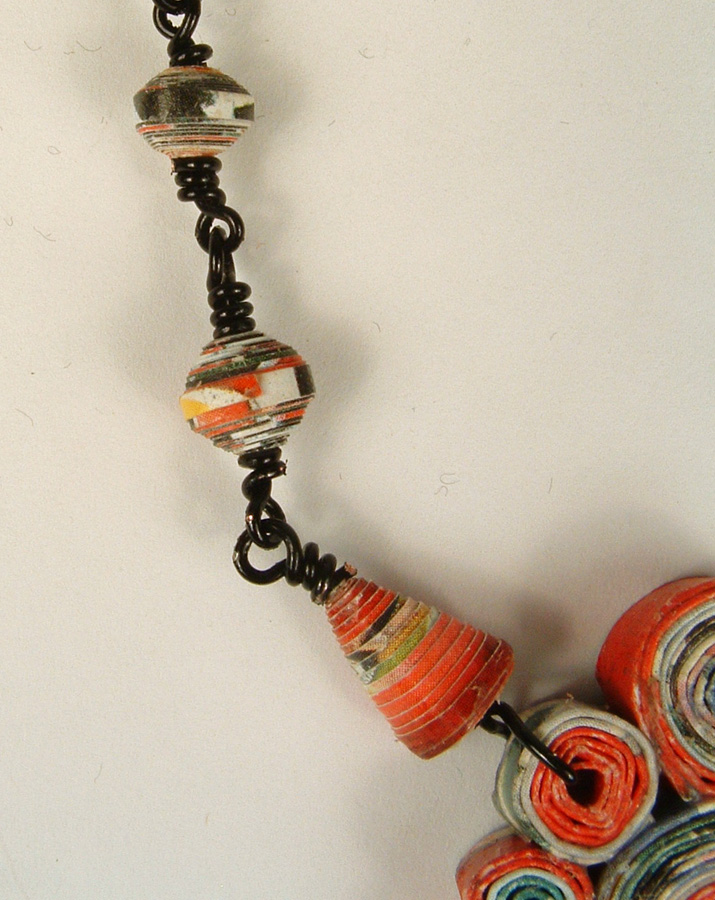
I did manage to cut out the page that I had decided to use (it hurt only for a minute). I cut the strips and flags that I wanted and started rolling around a yarn needle and pin. I used Aleene’s Tacky Glue (that wonderful, all-purpose craft glue) to glue the ends of the strips down.

For the pendant, I folded the 1/2″ strips in half so that the color could be seen from the front. I also covered the back of it with Tacky Glue to give it better stability.
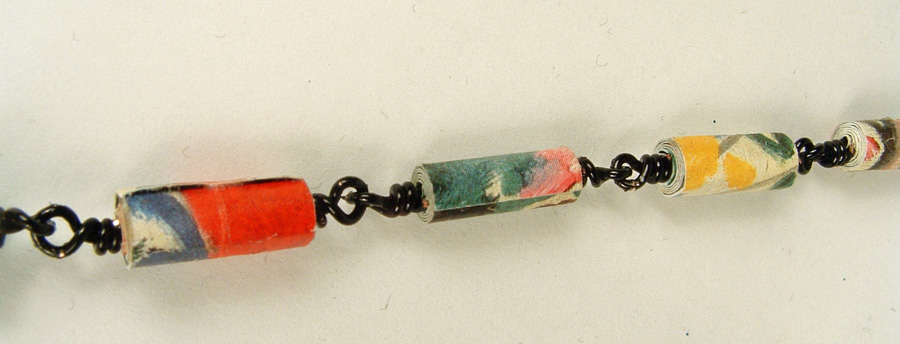
I really liked the rondelles, but did not want them to go all the way around the necklace, so I made straight cylinders to finish out the necklace. I wire-wrapped all the beads, made a clasp and I was good to go. For the wire, I used copper coated black wire.

This is just a study and is not meant to be worn regularly. I do like the pendant so much that I will probably make another one and coat it to make it more durable to regular wear. This process is so much like quilling, that I could probably use some of those techiques to improve my beads if I continue making them.
This is a huge step from the rolled paper beads we used to make as kids. You know the ones.

Happy crafting from Kristin!
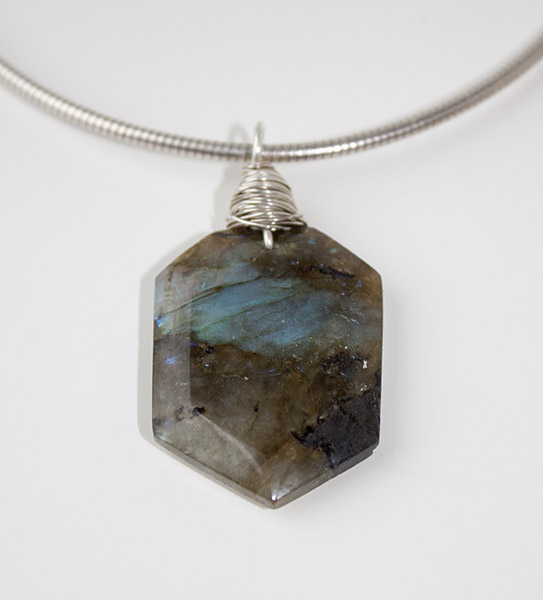
Loryn: My favorite jewelry pieces are the ones that Kristin makes me. I especially love pendants, and she made me two beautiful pieces this year. Labradorite is one of my favorite stones, and the simple piece above has beautiful fire. I love her simple treatment of it. It’s shown on my omega chain.
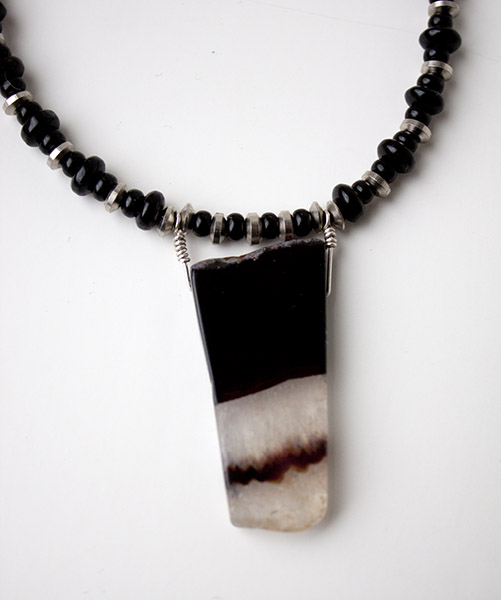
This one is onyx and quartz that is side-drilled at the top. I oohed and aahed over this piece of stone while I was at her house a few months ago, and she didn’t let on that she was already planning a necklace for me! I love how she’s hung it from the bead necklace.
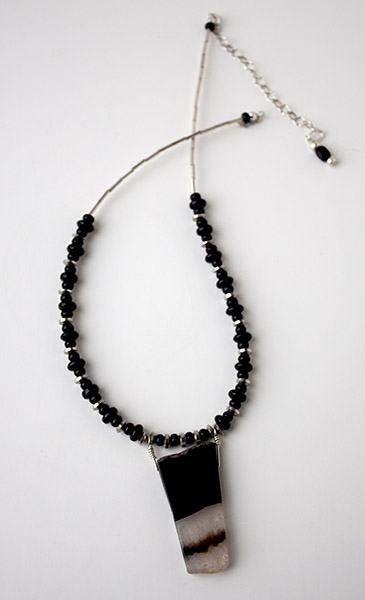
Here you can see the complete onyx necklace. I can wear it with just about anything!

Last year she gave me two great necklaces, too. The one above is red coral, and very dramatic.
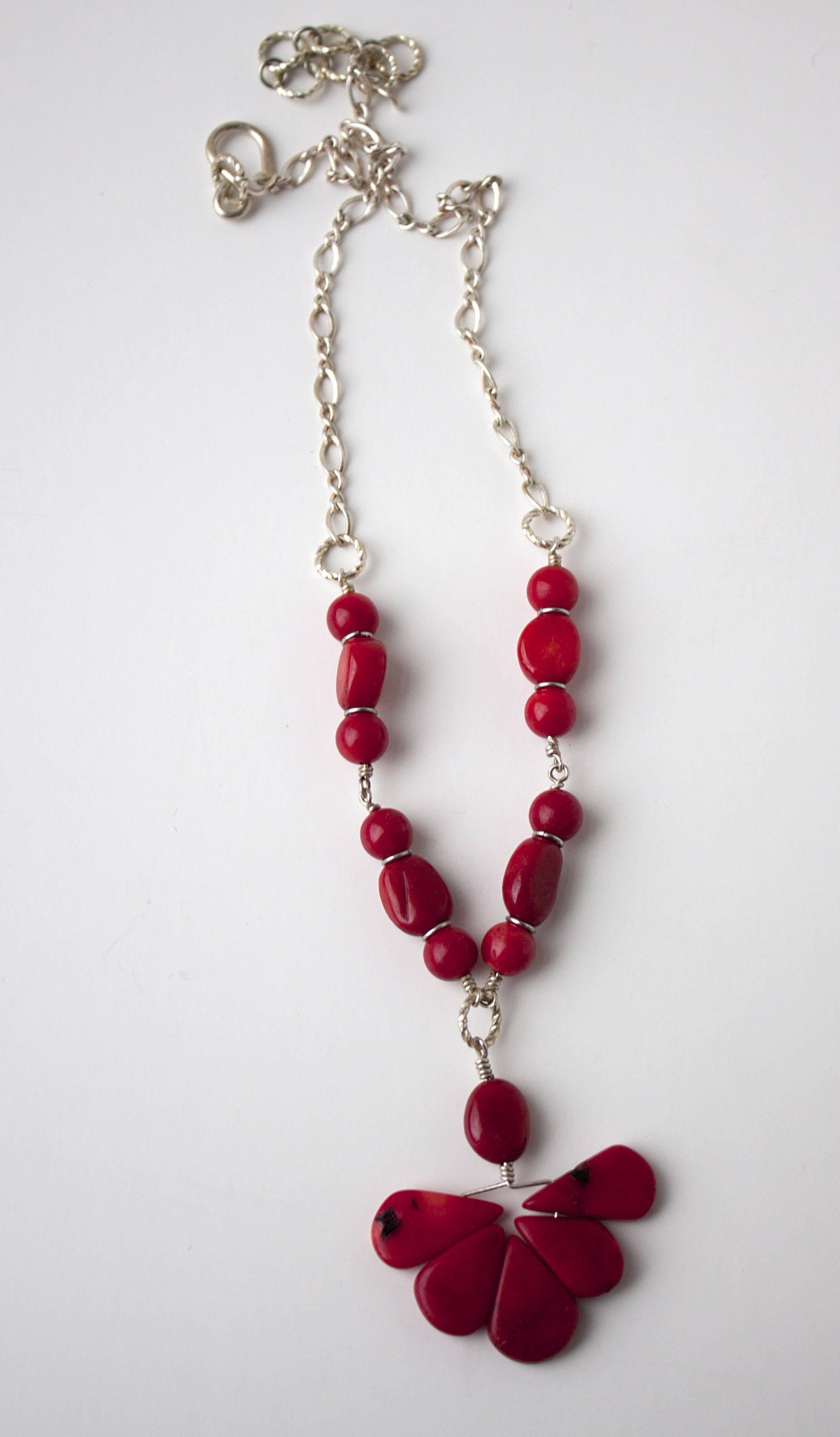
Here is the complete coral necklace. I love the vintage vibe that it has.

This last one is a dark gray jasper on a beaded necklace. Another simple, elegant piece that I can wear any time!
–Loryn

Cheri: On to Kristin’s gift. Kristin and Lynne went to Lake Michigan several months ago to camp and had a fantastic time. Lynne brought me back some rocks as I am a pretty avid rock lover.
The rocks were really nice and flat and round. I was very intrigued by them because I had just read a tutorial on how to drill rocks on craftgawker and I felt that I really needed to try it out. It was a little touch and go, but I did manage to get holes in several of them.
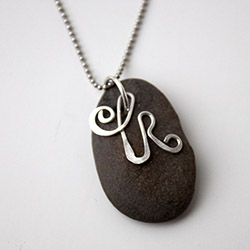
As I looked at the rocks, I knew that I wanted to make Kristin a necklace. I also wanted to make it a little more personal, so I made a “K” out of wire and then flattened the wire. I looped the initial into the hole with a jump ring. I had a ball chain that I thought looked very nice with the wire and put that on it.
It would also look pretty cool with a thin piece of leather cord. I was really pleased with how it turned out and I think Kristin was really thrilled with it too.
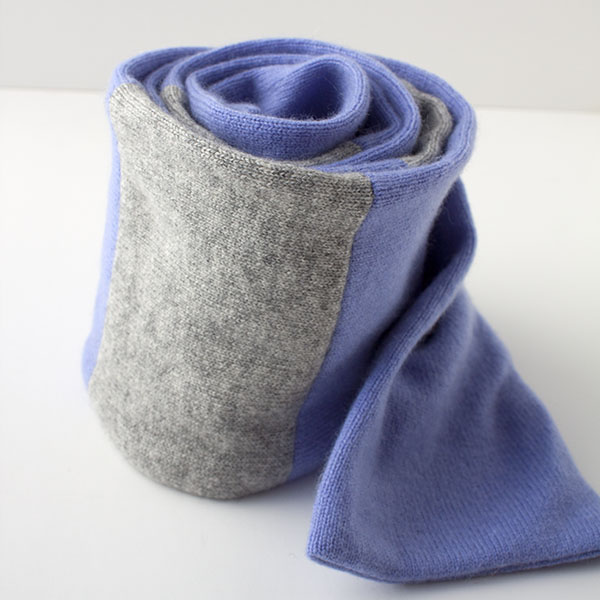
Loryn: We Crafty Sisters bounce a lot of ideas off of each other, and this cashmere scarf design was the result of a great collaboration. My stepdad (Lynne’s husband) asked for a cashmere scarf for Christmas. Lynne found one for $55 on Amazon, but she was sure there was a thriftier, crafty way to make one.
She and I started brainstorming. I did have a stockpile of thrifted cashmere sweaters to take apart for yarn (see my yarn post here), but she didn’t want to knit a scarf. What about sewing a scarf from the sweaters? The sweaters aren’t big enough to make a complete scarf without seams, making stripes ideal. A tube design hides all the seams and makes a double thickness that feels wonderful. Lynne took several sweaters to experiment with, and came back with this:
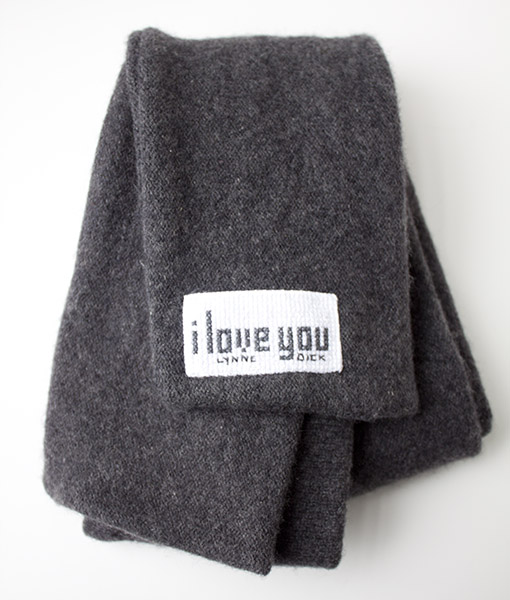
She made it in one solid color for an understated look. The fabric came from a vintage Scottish cashmere vest, so it is the most unbelievably soft scarf you’ve ever felt. She also made the fantastic cross-stitch label:
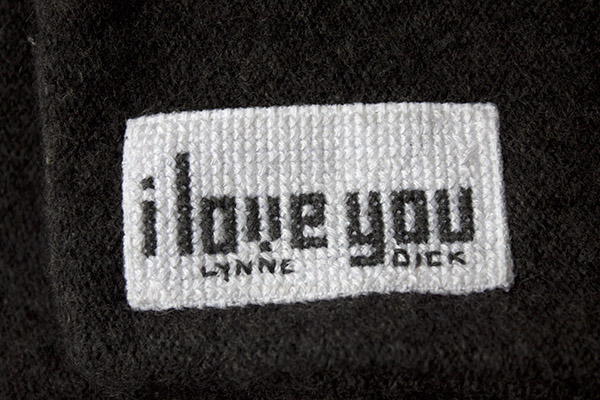
I loved the scarf so much that I immediately began planning to make a few of my own. Here are the steps:
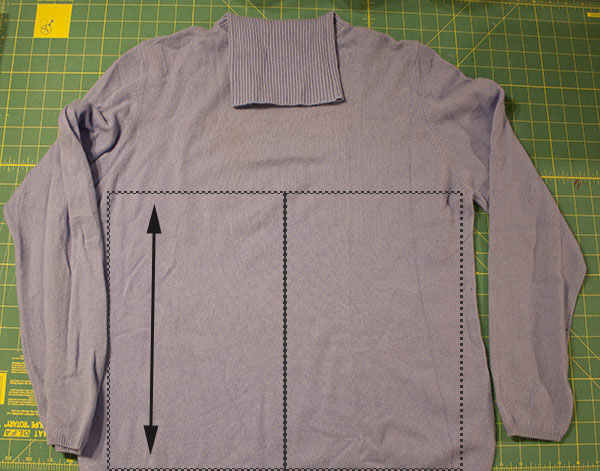
Lay out your sweater so you can plan your scarf. I used four rectangles from each sweater, two from the front and two from the back. The width will depend on the size of your sweater. For this Medium size, I made each rectangle 9 1/2″ wide and 13″ long (up to the armscye).
The scarf will be less likely to stretch out of shape if you keep the rectangles aligned with the vertical length of the sweater (the direction of the arrow). If you cut the rectangles in the other direction, they will stretch more. This rule can be broken like any other, though, so experiment away!
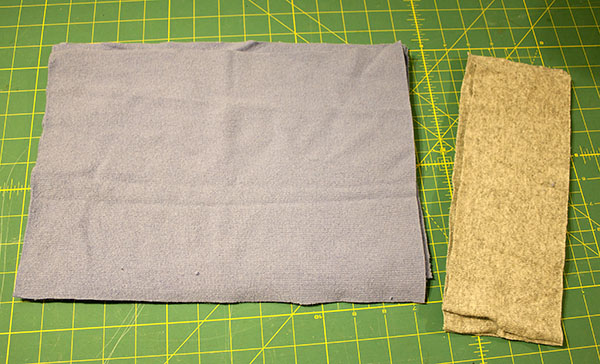
In addition to the four rectangles from the blue sweater, I also cut three 9 1/2″ by 4″ rectangles from a gray cashmere sweater. Again, keep the stretch of the knit crossways to your pieces.
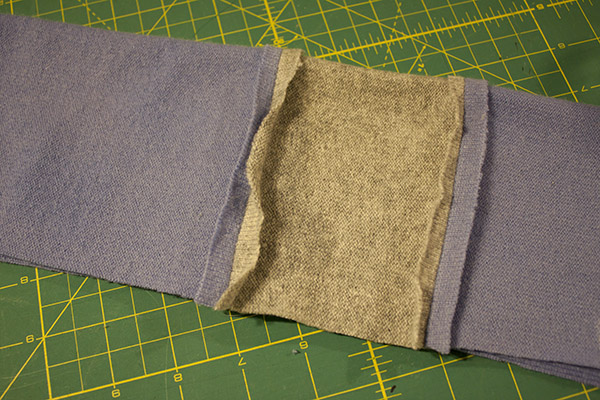
In this step, I’ve sewn the stripes together on the 9 1/2″ edge, alternating colors. Press the seams open when you’re done. Then, fold it in half and sew across one short end, down the long side, and turn the corner of the other end, leaving a small opening to turn the scarf. Turn it, and slip stitch the opening shut (see a slip stitch tutorial here). I gave it another pressing, and it’s done!
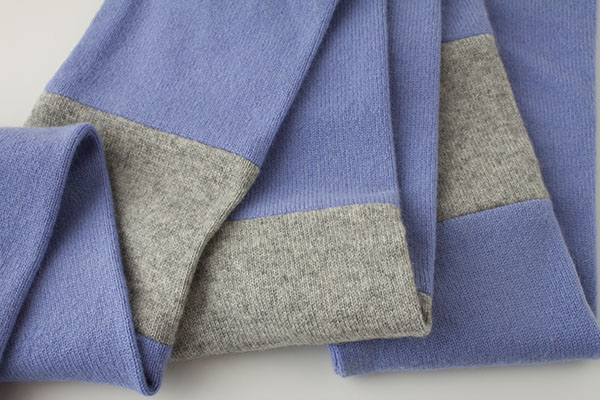
These scarves are very quick and easy, and we’ll be whipping up a lot of them for gifts and for ourselves!!
–Loryn

Cheri: I thought I would post a few of the items that I made for my sis and my nieces for Christmas. I will start with the bracelet that I made for my sis.

Lynne does a squiggle usually daily, she then goes on to create a character or a person, or even a thing and then works on her color and shading of the squiggle. I especially love her squiggles and look forward to seeing them each day.
When I think about making something for someone, I try to consider what I would like to receive. I know my sister likes bracelets so I was pretty sure that I wanted to make her a bracelet. When I thought about it a little more, I realized that her squiggles would be awesome shrunk down and made into a bracelet for her.

I bought a bracelet blank at Hobby Lobby. I then copied her squiggles from our blog and shrunk them down to size. I chose which ones I wanted to use and cut them out. I then glued them to a small piece of card stock and then glued all of that to the blanks. After I was sure that these were dry, I filled the blanks with Mod Podge Dimensional Magic medium. There are a lot of other resins that can be used but I really wanted a medium that would be very low fuss.
I am really quite proud of how it turned out and she really loved it.

Loryn: Conventional sewing wisdom says that shouldn’t sew with old thread, because it breaks too easily. This is one of those areas where I ignore conventional wisdom, and I think you should, too.
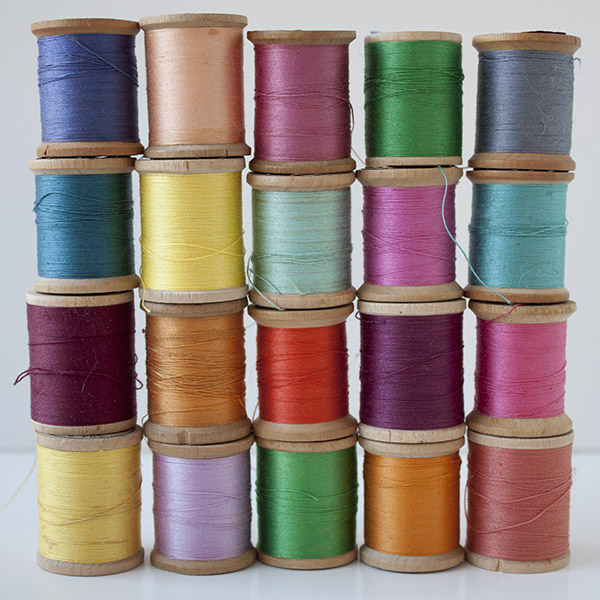
I see lots of vintage thread at garage sales and auctions, and I buy it whenever I can. The best part is that you can get a wide range of colors that are hard to find in modern thread. I haven’t had any trouble with old thread breaking, but I wouldn’t use it for parachutes or the crotch seam of your pants!
My favorite use for old thread is for topstitching, especially the small, brightly colored spools from the 30s to the 50s. You can find it in great colors, it’s usually 100% cotton (so it has great luster), and only using it for topstitching makes a small quantity go farther.
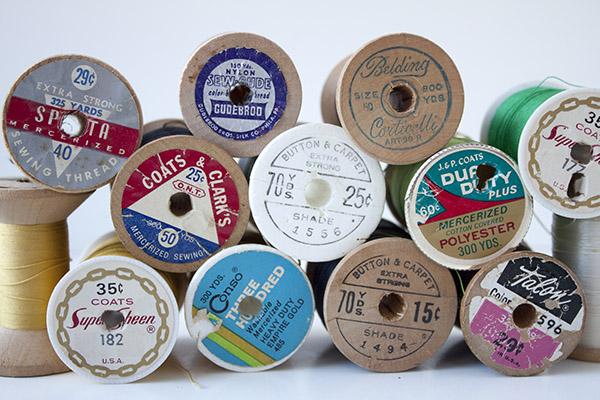
I use larger spools of thread from the 60s and later for general sewing. Just like with the older thread, you can find it in unusual colors to match vintage fabrics, and you can find lots of different weights. And you just can’t beat the price!
–Loryn
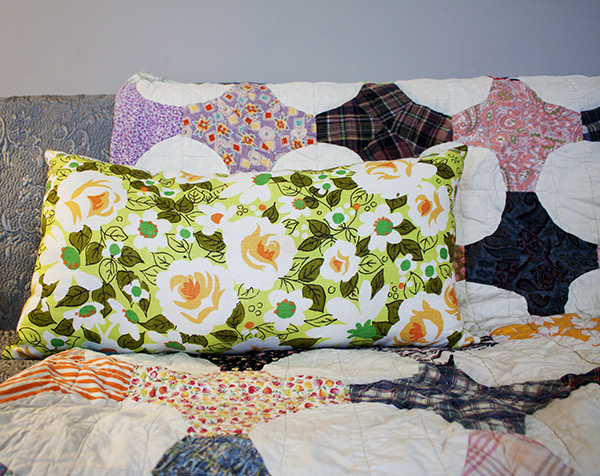
Loryn: You can make simple pillows from just a bit of fabric and some stuffing material. For this pillow, I did a simple slip stitch closure that is quick and easy. If you’re not confident with slipstitching yet, read on for some tips to help upgrade your skills.
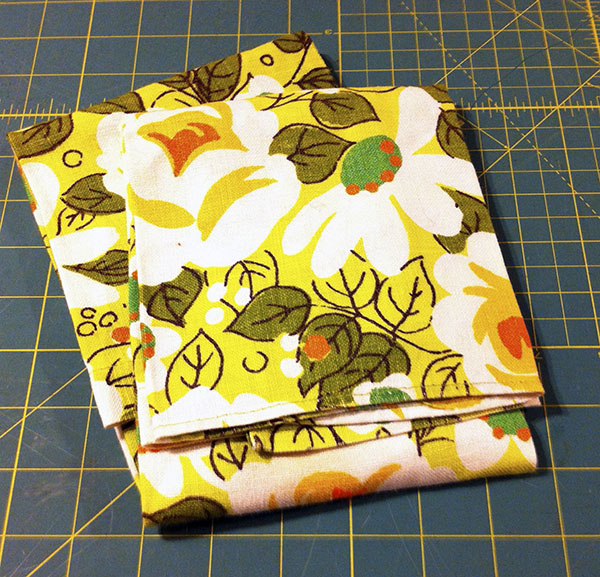
For simple pillows, you can be really creative with materials. For this pillow I used vintage linen tea towels, an inexpensive source for a great print. I used two bed pillows for stuffing material. This pillow is very tightly stuffed to provide a lot of support.
To make your pillow, cut two pieces of fabric to size, and pin them together with the right sides together.
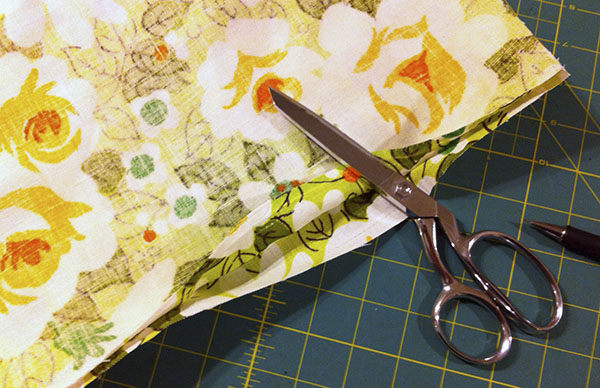
Sew the edges together, leaving an opening for stuffing the pillow. Be sure to leave the opening in the middle of a seam, not in the corner, because it’s hard to form a corner with hand stitching.

Trim the corners so it will be easier to turn them.

Turn the envelope right side out, and press the seams. Use a pin or dull needle to pull the corners out, but don’t pull so much that you tear the seam.

Before you start stitching, pin the seams in place across the opening. You’ll place your slip stitches right on the fold.

Place your knot inside the seam, and bring the needle out on the fold. The most important thing to do to make your slip stitching look good is to keep your stitches lined up. Make the stitches short, and catch the fabric on the other side directly opposite your first stitch.

Pull the stitches taut after every few stitches. Keep sewing all the way across the opening. When finished, make a knot with your needle, and hide the thread inside the seam. Enjoy your new pillow!

 the crafty sisters