All posts by thecraftysisters

Notes from the Farm on Wetlands

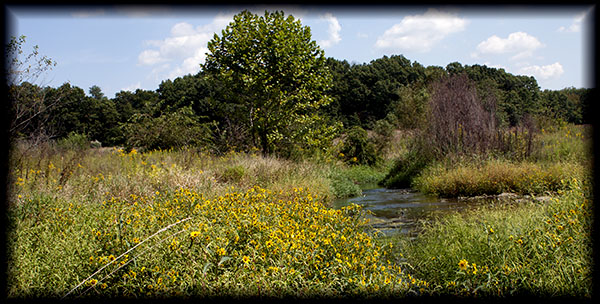
Creek in wetlands
This is the creek flowing out of the wetlands.

Lynne: My last post was about the beauty of the prairie on the farm, today, I want to post about the beauty of the wetlands on the farm. One of the best things about the farm, is the number of different habitats you can see.

The wetlands are as wonderful as the prairie, but I like to look at them more than I like to walk in them. There are insects and snakes and sucking mud that make me careful about what I wear when I do go exploring. I put on those Wellingtons I spoke of the other day and resign myself to getting really dirty and really wet. But there is so much to see, it is worth whatever it takes to get clean when you’re done. I think of it like swimming in cold water those first few days of summer, once you’re in you enjoy it so much you don’t want to get out.

The photo above is of a stretch of creek that has already been filtered by the main, marshy areas and you can tell that the creek is running clear and swift. The bank of yellow flowers in the foreground is a showy clump of  the pointy sticktights you find on your clothes and your dog after a walk.

The creek is clear, because the wetlands have captured the silt and fertilizers that run off of fields and land cleared for building. The marshy areas act like a sponge that absorbs this run-off before it is dumped into rivers and streams. The wetlands also act as areas of flood control as they absorb water during periods of flooding and release their water during periods of drought. Purdue has a very informative webpage on wetlands and water quality, if you wish to know more.

Pond formed by beaver dam.
The start of a pond behind the beaver dam.

These two photos show a beaver dam. Footprints and the more telltale tooth-cut logs and branches helped us discover it. The Great Plains Nature Center has great photos of beaver and their chewing habits. Water is dammed and pools behind the dam create more beneficial marshy areas. However, wetlands change quickly because of their response to the weather. A beaver dam today is not a beaver dam tomorrow and ‘busy as a beaver’ has meaning when you have to repair or start over whenever a big storm passes through.
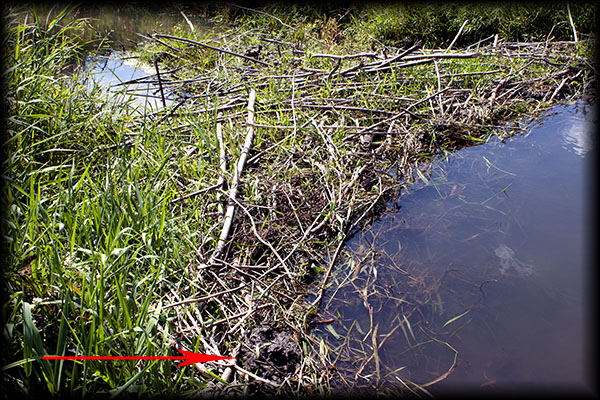
Beaver dam
Beavers have been working like beavers and left a telltale print.

Now that I think about it, maybe I do like the wetlands better than the prairie. Oh wait, I haven’t posted about the woods yet or the pond. Well, I guess I don’t have to worry about which is best…If you can’t choose which one you love, love the one you’re with.
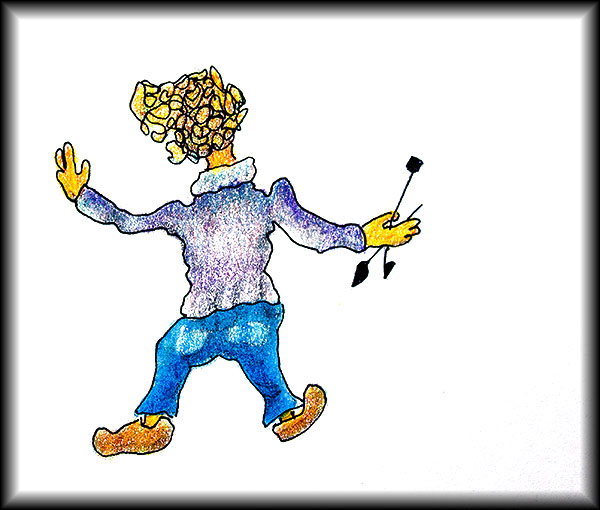
Bizarre Finds — Garter Hooks

Cheri: Sometimes it can be very difficult for me to pick out the most bizarre item that I picked up at a garage sale. I don’t automatically pick up an item thinking, “this is bizarre”. I am actually thinking about what I can do with what I picked up. It may be what I may feel that I can make from the item, or maybe even what I think someone else can make from it. And then again, I pick up some items because I just think they are really cool and I want to have that item. I like to think that it adds to the cohesiveness of what I collect. That being said, my bizarre item for this week is a bunch of garter hooks. When I first saw the bundle of hooks, I was shocked. For one thing they looked brand new, and for another there were so many of them. I have a tendency to buy items that I can find a lot of. This way I have several to work with if I should choose to and I can make a few different items. When I picked them up an idea flashed in my brain, these would make awesome curtain hooks for a bedroom. I could not get the image out of my head, so, I bought them. Will I use them in my bedroom as curtain hooks for some slinky fabric curtains? Maybe, maybe not. You just never know.


*Please note: Unable to locate the hooks as I have placed them in a place “I will remember”, unfortunately, I have not “remembered“ yet. Trust me, they really are cool.

Notes from the Farm on the Prairie

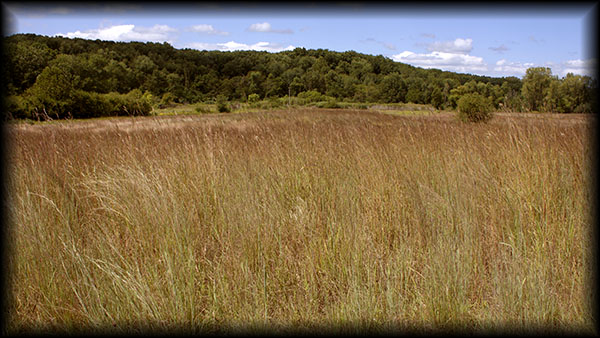
Prairie at the farm.
Not vast acres of prairie, but a wonderful vista.

Lynne: Have you ever watched Little House on the Prairie and wondered what it was like to be Laura Ingalls running through the tall prairie grass? Well, the farm has an area of prairie grass and at this time of year it is turning the most fantastic shades of purple and gold.

I cannot describe properly the look and feel of the prairie. The wind moves in waves over the grass and the smell is like hay but less dry and the feel is people-less. Just me and the wind, the grass and the sky. I have tried to get the colors and the feel captured in these photos, but at every angle the light is different. I’ve played with Photoshop to give an approximate vision of what I see with bare eyes, but of course it is not the same. We need more than sight to see something properly.

Prairie grass
Now, this is up close and personal.

I wondered about the prevalence and history of prairie in this area and came across this book on google, The History of Cass County, Volume 1, edited by Jehu Powell. There are numerous references made about prairies and prairie fires in Cass County. Isn’t it a marvel that I can yearn for the days of vast plains and yet rejoice at the ability to read and search a rare book with ease.

Jehu Powell relates the troubles the pioneers had with prairie fires and I suspect that every acre of grass turned into farmland made them feel safer. I cannot imagine the tremendous heat and roar of a prairie fire, but the grass needs fire to reseed itself and to keep thickets and trees from taking over. One third of the prairie here at the farm is set on fire every year. Careful attention is paid to weather conditions, proper fire breaks and there are firefighters on standby.

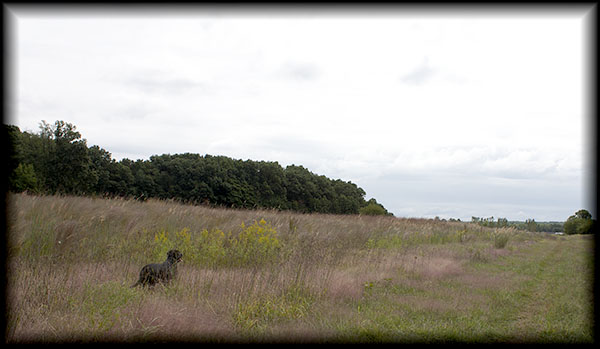
Mac and prairie grass
Mackie is sure that the deer he saw is somewhere close.

Mackie, my black labrador, loves the prairie grass. He bounds up and down through it like a deer. You can just see the top of his head and his ears flapping for a split second and down he goes again. His tongue hangs out and he has what looks like a huge grin on his face. Sometimes, watching him, I wish that I were young enough to run with him. I remember running through pastures barefoot and wondering why running meant fewer cuts on your feet than walking. However, I am satisfied watching him from the Mule and dreaming of past times.

Daily Squiggle

Elephant, mouse and butterfly.
This elephant is not afraid of mice and loves butterflies.

I did this squiggle of the elephant using only red, blue and yellow color pencils. This was before I used black to bring out some depth and I can see how that would help. I do like the way though that not all of the color is blended. This does add some depth and lots of texture.

The mouse and the butterfly are a combination of marker and pencil. They are there because the elephant was lonely.

Notes from the Farm on Goldenrod

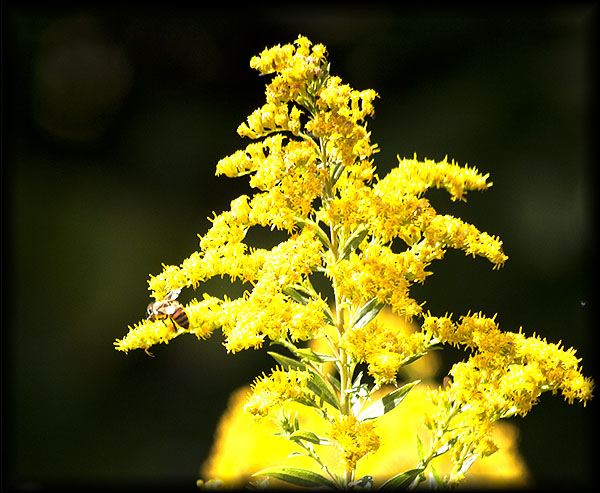
Bee and Goldenrod
Bee gathering goldenrod pollen.

Lynne: This afternoon at the farm, I looked to the north at the fields of wild grasses and was surprised by a mass of yellow. The goldenrod is in bloom. When goldenrod blooms all the insects know that frost is not far behind and all the bees and butterflies and insects can be found with their snouts buried in the pollen.

Since all those creatures were busy with the goldenrod, I thought it would be a good time to get some of those interesting closeup photographs of tiny creatures. I rode out in the Mule (machine type Kawasaki not 4 legged type animal) and stopped near the edge and put my finger to the shutter release. There were so many insects on the goldenrod that I wanted a picture of them all, but these two pictures with the bees show the rich heavy pollen and the bees’ determination to gather it even with a nosey photographer and her camera too close for comfort.

I sneezed for a while afterwards and I blamed the goldenrod, but I found this website, The Great Plains Nature Center, and learned a great deal of information about the flora and fauana of prairies. Goldenrod is not the culprit of fall allergies. Its pollen is thick and sticky to attach itself to the insects that pollinate it. Ragweed is the culprit because it pollinates with the wind by releasing millions of grains of pollen into the air and into your nose. Ragweed is green and fades into the late summer foilage, but goldenrod stands proud and yellow. Guess who gets the blame for allergies.

Next time you see a field of blooming goldenrod, take the time to thank the land owner who is willing to allow weeds to grow. Weeds are only plants that humans have not found a way to make money from, but to the insects and birds those same weeds are their super Walmart and discount shopping mall all rolled into one.

Bee and Goldenrod
Bee gathering goldenrod pollen.