Category Archives: craft

Crafty Challenge I—Wooden Spools


Wooden Spools
Wooden Spools

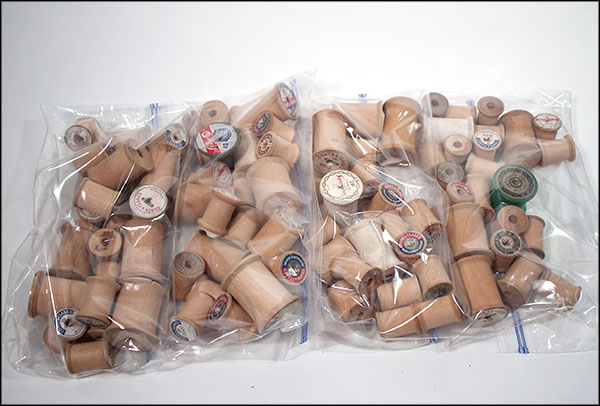
The Crafty Sisters are kicking off our first Crafty Challenge! I came across this box of wooden spools tucked away in the garage (going into my garage is like an archeological dig!), hundreds of them, with all the thread removed. What on earth would I do with a box of wooden spools? Better yet, what would each of us here at the Crafty Sisters do with them? The first Crafty Challenge was born!

Wooden Spools
Wooden Spools

Each of us approach crafting in a different way, and we each have our own favorite medium, so it will be fun to see what each of us does with the same material. There are no rules to this challenge, just use spools! There are no winners or losers, either. This is just creativity and play at its best!

Wooden Spools
Wooden Spools

To divide up the spools, we passed the container around and took a spool with our eyes closed. That way, it’s totally random, and we each have a variety. We’ll post the results on Sunday, October 9th. It will be very interesting to see what we each come up with!

—Loryn

The Unexpected

So as some readers may know we (Kristin and Lynne) are up in Northern Indiana visiting the Indiana Dunes. Lynne (who shall hereafter in this post be called Mom) had never been to the Dunes before, so we came up here for our yearly camping trip. We travel well together and as we had nowhere specific to actually be, we have stopped at any and everything that looked interesting.
While wondering around trying to find Beverly Shores we found this excellent little art store. After wondering around the store for a bit, I could no longer call it little. This place has more supplies crowded on every shelf, we could spend hours in here. I am actually writing this while Mom is looking at every type of pencil or pen available, whether oil, water or crayon.

If you are up north looking for art supplies, this is a great place to stop. It is called Glenn L. Firme Art and Office Supplies. It is on Highway 12 in Beverly Shores, IN. Hey, we found the town we were looking for!

20110919-030753.jpg

The Big $15 Bulletin Board

Loryn: A really big bulletin board is a great tool for all crafters. Martha Stewart recommends using homosote board wrapped in fabric. It’s reasonably priced and comes in 4×8′ sheets, but I can’t get it without a truck and a 60 mile round trip. Luckily, there is a cheap and easy alternative.

I made this bulletin board using suspended ceiling tiles. They make a great bulletin board surface, can be easily wrapped in fabric, and they cost around $5 for a 2×4′ tile. If you know someone who is remodeling, you may even be able to scavenge them.

I used fabric from my stash to wrap these, and I cut each tile in half to make better use of the fabric. The tiles are so lightweight that I hung them with a finishing nail in each corner. They make a 4×6′ bulletin board from around $15. They’re great to hang over a desk, in a crafting area, or in an entry way for a busy family!

Quilting Technique—Finished Wristlet Purse


Wristlet
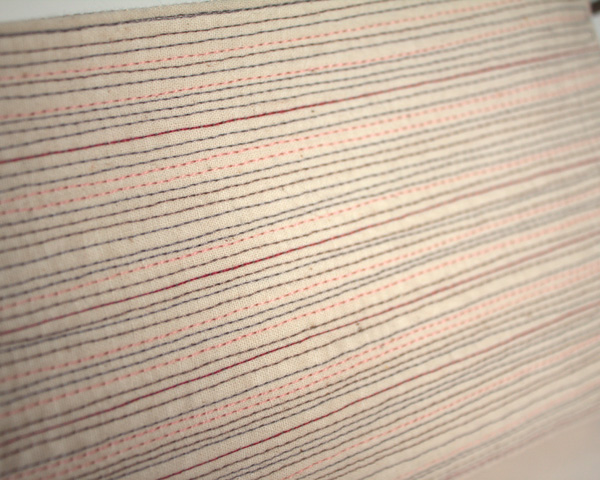
Stripe quilted wristlet.

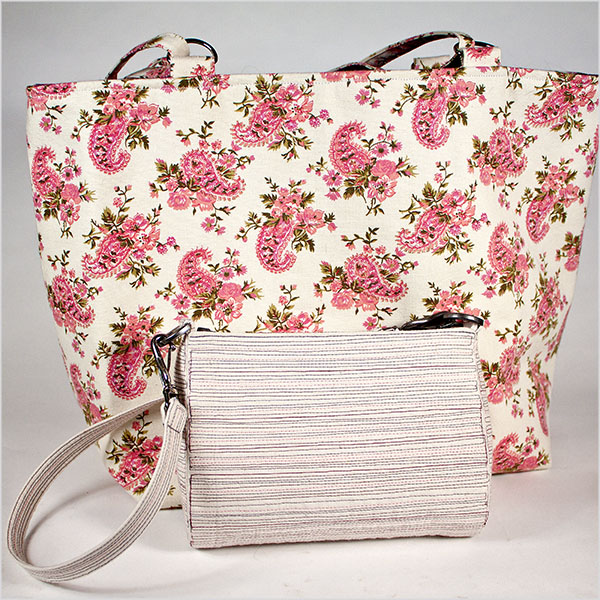
Loryn: I’ve been working on a mini purse or wristlet to go with my new paisley bag. I wanted it to coordinate, but not match too slavishly. I also wanted to try a different spin on the quilted technique I had used in one of my unfinished objects. You can also see it here, in this wristlet I made for my stepsister a few years ago:

Purple stitched purse

For this purse, I made and finished each piece separately, before assembling.

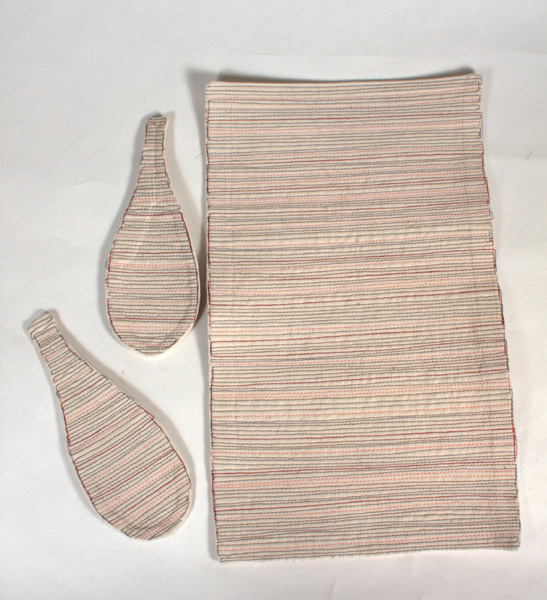
Previously, I had made the pieces out of a quilt sandwich of muslin surrounding flannel. I didn’t have any flannel (and our fabric shop has left town), so I used six layers of muslin instead.I did not use a pattern for this. I made the main body the size I wanted, 7″ by 11″ long, and quilted it. Then I made the curve I wanted and sketched around it to create a pattern piece for the sides.

I had not tried multi-colored stripes before. I wanted this design to read as gray, so I used two shades of gray, with pink and fuschia. I did all of the quilting before assembly.

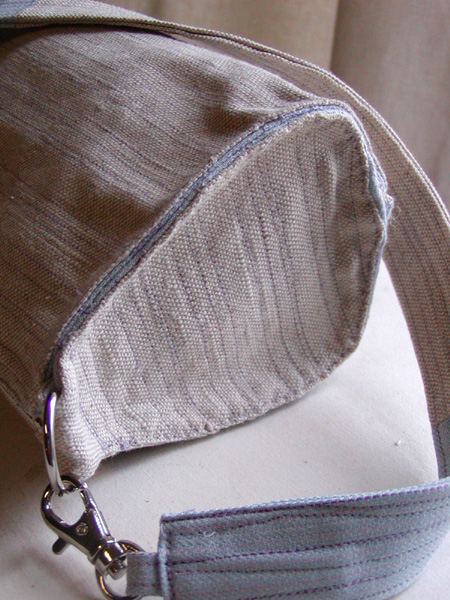
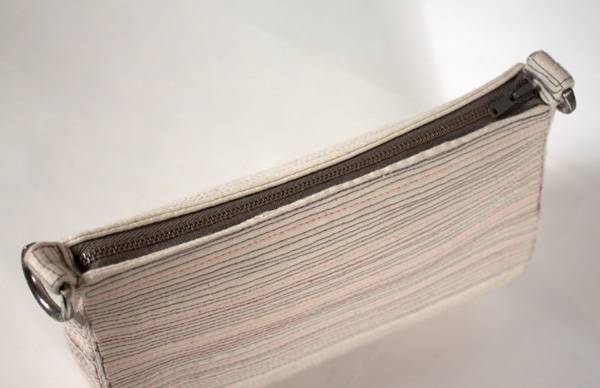
The next step was to add the zipper (seen here on the finished piece). To sew a zipper into a tube, use a zipper that is a few inches longer that the piece. Baste the zipper into place, then sew it into place with the zipper fully open so you can get both sides under the presser foot. When you’re done, cut off the excess and sew a tailor’s tack over the teeth to keep the slide from coming off.

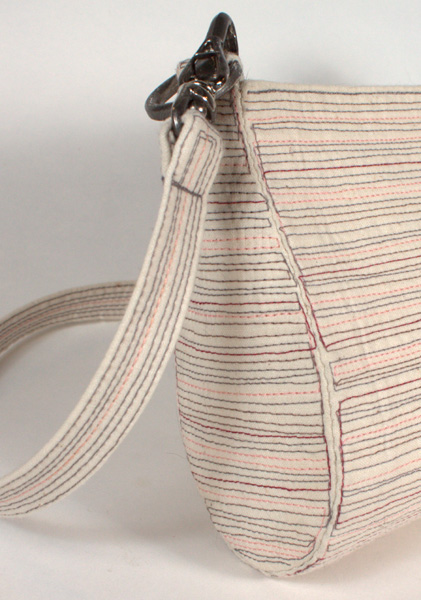
The hardware was a pain for this project. Our local Joann’s Fabrics closed because a super Joann’s was opening in Kokomo, and evidently they can’t have two stores within 30 miles of each other. I stopped in at the new Joann’s when Kristin and I were in Kokomo to look for hardware, and the selection was simply terrible. They had no small d-rings. Kristin’s ingenuity came to the rescue, and she suggested that I use belt buckles with the center piece removed. They didn’t have the hooks I wanted, either (like the ones on the purple-stitched purse above). Instead, all they had were this spring type. Save yourself the headache and don’t buy the spring-type pictured here. They fall apart almost instantly. Also, the finishes didn’t match, as one was brushed and one was glossy. Spray paint to the rescue!

To assemble the bag, I slipstitched the sides together by hand. This looks really good, but honestly, it was a pain!

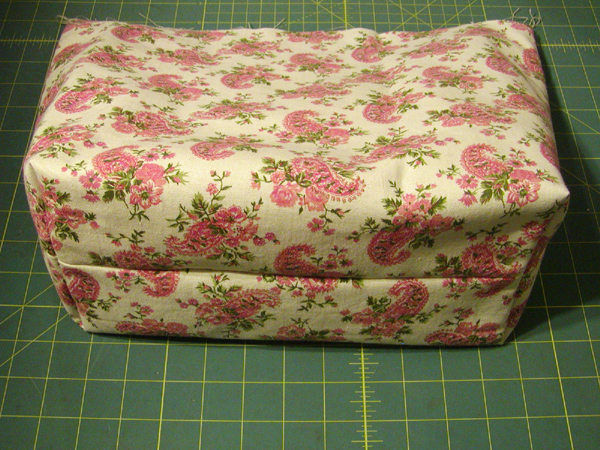
Finished mini purse


And here is the finished bag! I will have to replace the hooks sooner rather than later, but I’m going to look at hardware stores to see if I can find better quality there. I’m looking forward to carrying them to work tomorrow!

Cheap Tricks: iPhone Bag

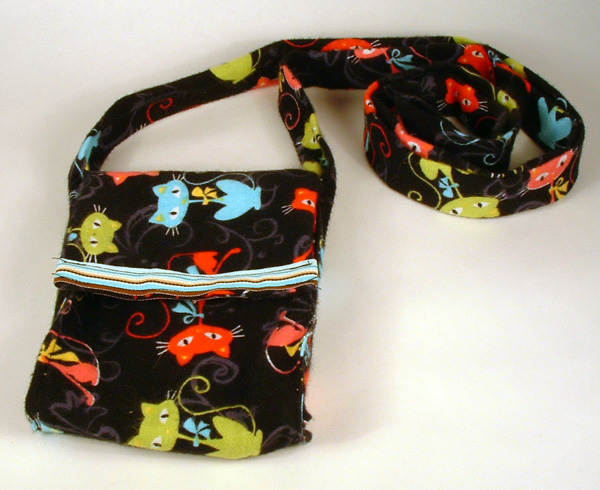
Cheap tricks are great and most of the time, they are things you just don’t think about, you just do them. Today, I did one that I had to think about. I love lounging around my house in comfortable clothes. However, very few of those pajama type bottoms that are the perfect lounging wear actually come with pockets where you can stash your phone, and since I like to listen to audio books and music while working around the house, I definitely need someway to carry my phone around. Hence, I created the Kitty Bag (named after the fabric I used, not the actual application of the bag, although, if the Kitty Bag were big enough, our cat, Jamison, probably wouldn’t mind being carried around in the bag too).

I bought this absolutely adorable, kitty-patterned flannel some time ago. It was just too cute to pass up a few yards and was on sale to boot.

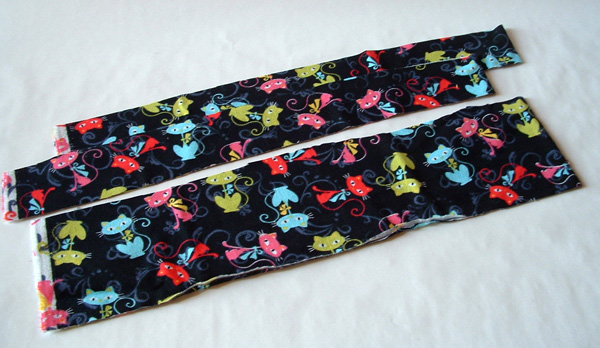
Black flannel with neon kitty figures.

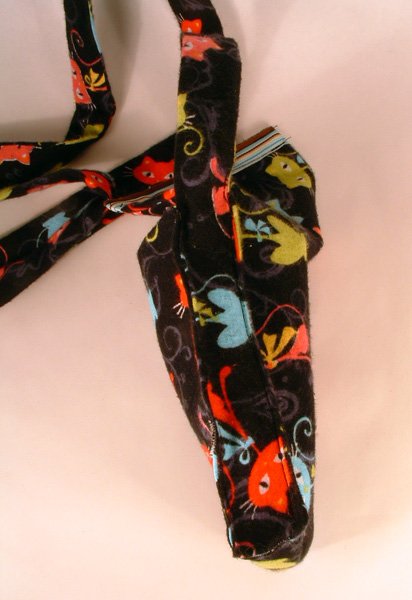
You can see the three pieces I cut out of it today. They are all cut selvage to selvage (45″). I then sewed the long, thin strips at one end, right sides together. Then I sewed this even longer strip into a tube, again right sides together and turned it for the handle. The last piece of fabric (which is about 1″ wider on each side than my iPhone) I also sewed right sides together, leaving the selvage side open to turn the fabric through.

Next I ironed the two pieces (thank you Loryn for stressing ironing projects, it really does help). After determining the length of the handle (the handle is actually sewn all along the sides of the bag, so it needs to be long enough to go from the bottom of the bag over your shoulder and back to the bottom of the other side of the bag) I ended up cutting off about 3 inches on each end. I made the bag to go across my body, not just over my shoulder. Then I sewed the handle in, starting with the front panel of the bag, down and around to the bag with only about a 1/8″ seam. I did the same thing with the other side of the bag. This created a flap of the extra body fabric.

Side view of the handle stitching to the body fabric

I needed to decide how much of a flap I wanted and I also wanted something to weight it down a little and after digging through my supplies, found a pretty ribbon that looked perfect with my neon kitties. I cut off about three inches from the flap and turned it under and wrapped the ribbon all the way around and sewed two seams, one towards the top edge of the ribbon and one at the bottom. This also has the benefit of closing the opening left from turning the fabric.

Finished bag.

All-in-all, this was about 1/4 yard of fabric (if even that much), 6″ of ribbon, black thread and some time, all of which I had on hand today. It was done very quickly (about an hour) and works just perfectly. It is also big enough to hold my ear buds and hangs just at my hip when wrapped across my body. Then flannel lining helps protect my phone from damage or anything else I choose to stuff in it.

Finished bag open to show my iPhone.

Well, time to get some housework done now that I can carry my phone around and bop to the music. Have a wonderful Saturday!

P.S. Sorry about the odd lighting effects, I just got my very own studio lighting and haven’t quite got them where I want them.

Recycled Cashmere Yarn

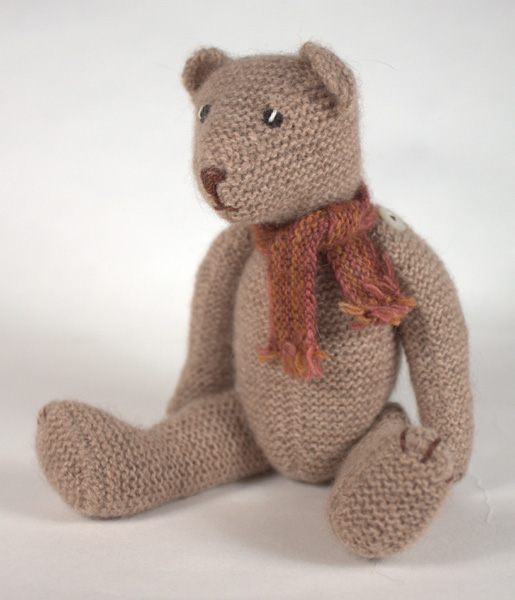
Miniature knitted teddy bear

Loryn: All of the Crafty Sisters love being thrifty, and it’s hard to beat the cost of recycled yarn. I pick up wool and cashmere sweaters at garage sales and thrift stores for a few dollars, and with a little work, I have beautiful and very inexpensive yarn. The little guy pictured above was made with recycled cashmere yarn from a fine gauge sweater. He is a miniature, knit at about 10 stitches per inch. The pattern came from The Knitted Teddy Bear, and the original is about 13″ tall. My version is about four inches tall, knit on 00 knitting pins. I hand dyed the yarn for his scarf. Cashmere takes kool-aid and food coloring dyes beautifully, and I’m working on another hand dyed, recycled cashmere project right now.

beige cashmere sweater

This is a Lands End cashmere sweater that I picked up for about $5 at Goodwill. When you’re looking for sweaters, look for high quality sweaters. Inexpensive cashmere will easily break, and very cheap sweaters will be cut rather than knit into shape (“fully fashioned”). You don’t want the ones that have been cut from a large piece of knit fabric, because you can’t unravel the pieces as one piece of yarn. It is also nice to find sweaters that are assembled with a chain stitch, which is easy to pull out. Once you have disassembled your sweater, you’re ready to start unraveling it.
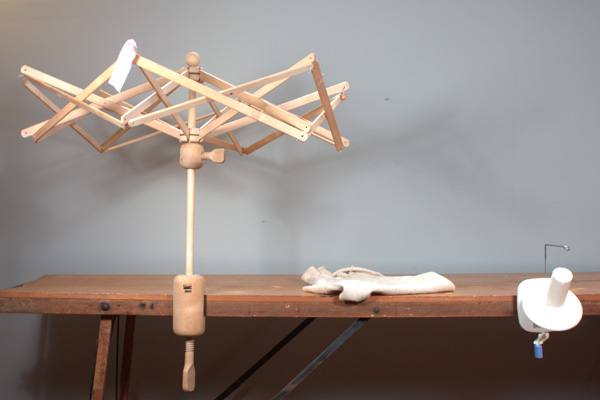
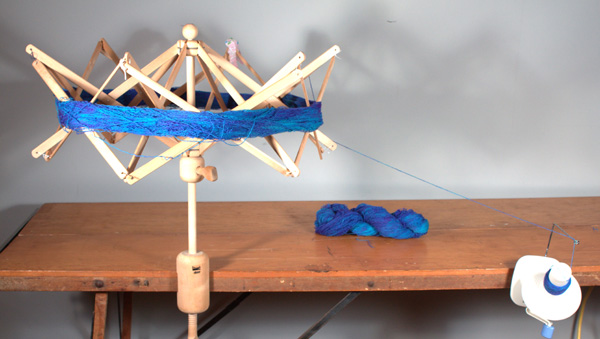
Swift and ball winder

The easiest way to unravel a sweater is to use a swift. Here, you can see mine. They are not cheap, but are well worth it if you use a lot of recycled yarn, or buy a lot of yarn in skeins. When I first started out, I would unravel the yarn and wrap it around an 18″ piece of cardboard, so I could count my yards. The swift is nice because it does the unraveling for you. Just hold onto the sweater and spin the swift! Of course, you may enjoy pulling the knitting apart. Kristin sure does—she spent her childhood pulling my knitting projects apart every time I set them down!
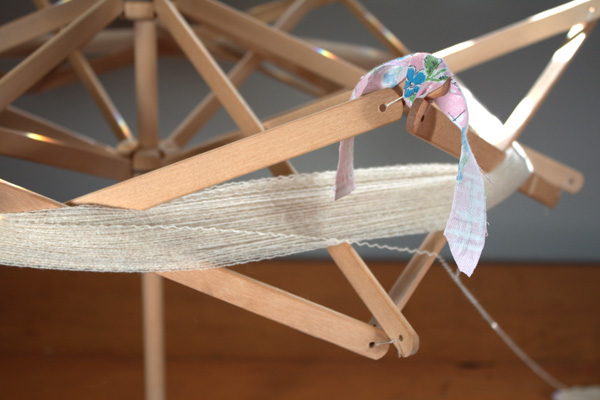
Here you can see the yarn part way unraveled. The pink tie is there so I can count the number of turns (and thus keep track of yardage).
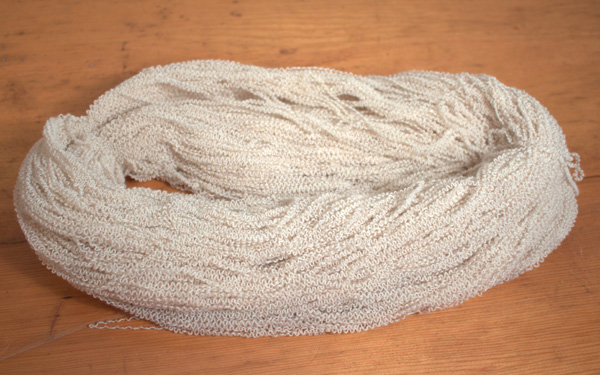
When you take the completed yarn off the swift, it looks like this. It’s easy to straighten back out by wetting and weighting it. But first, I plan to hand dye these two skeins.

A  lot of dyes are toxic, or use toxic mordants even if the dyes themselves are natural. These aren’t the kind of substances you want to use in your kitchen, especially around kids or pets. Luckily, you can dye protein fibers like wool and cashmere with kool-aid or food coloring. I’ve tried both with great results. Kool-aid dyes are more limited in color, and leave your yarn smelling fruity, so I prefer Wilton icing dyes. They come in a wide range of colors, and a little goes a long way. For this project, I’m using Royal Blue and Violet.

There are a lot of great tutorials on the web for dyeing with food coloring. I used both this tutorial from PieKnits (though I did not bother to use a thermometer. I just winged it and it came out great), as well as this YouTube video from Chemknits. Both were very helpful.

When my yarn was dyed, I stretched it in the tub to remove most of the kinks.

Here, you can see my highly scientific method! Just hook the yarn over shower rings and put a heavy bottle on the bottom. If you’re not hand dyeing your yarn, just skip to this step.

Once dry (and make sure it is very dry), it is ready to wind into a ball.

Here, I’m just getting started winding it onto the ballwinder. You can do this step with someone’s arms and just wind the yarn into a ball. I like the winder because it makes my thrifty recycled yarn look very expensive and fancy.

Speaking of, here is the finished product:
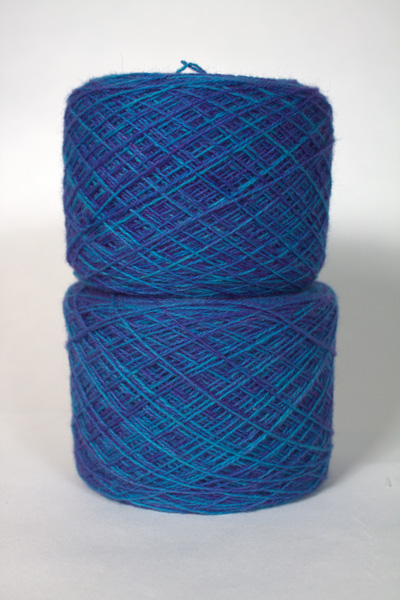
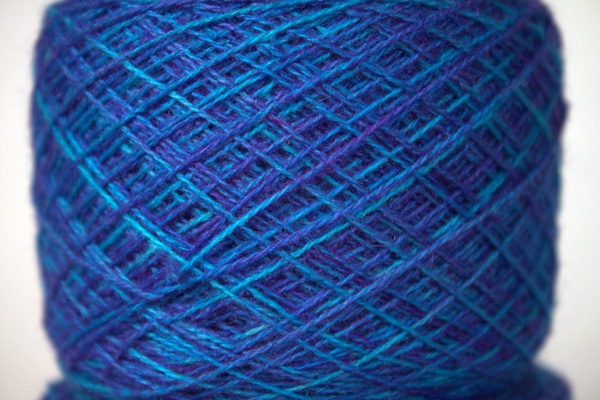
I love the color variation you get from hand dyeing! Here is a close up:

Cashmere yarn can be in the budget of the thriftiest knitter! I’ve even found a few worsted-weight cashmere sweaters at the thrift store, so keep an eye out! I only unraveled the sleeves, for a total of 640 yards of lace-weight yarn. Now it’s ready to knit!

—Loryn

Finished Objects! Paisley Bag

Loryn: I have a finished object! This is the first one from my Unfinished Projects post. Last week, it looked like this:

I sewed up the bottom of both the bag and the lining first:

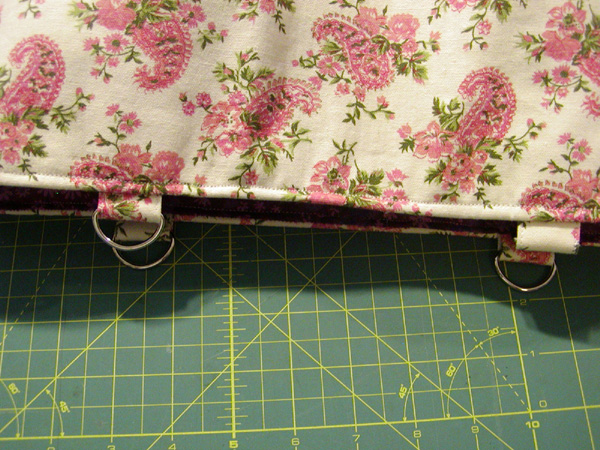
Then I made the small pieces that attach the hardware to the body of the bag, and sewed them to the top of the bag:

The next step was to sew the lining in with the right sides together. I leave an opening in the bottom of the lining so I can turn the bag right side out. With a row of topstitching around the top, it was ready for handles.

The handles are doubled, so I ironed them into a bias tape shape, threaded them through the rings, and sewed the ends together. I then did the edgestiching. It was a little trickier, but it prevented two of my sewing pet peeves. One, I didn’t want a bulky spot from sewing two four-layer, edgestitched ends together. Two, I hate turning tubes. I have a nifty bodkin, and I’ve read scores of tips in Threads, but I still end up with frayed pieces of fabric and even more frayed nerves. So, I cheat, and just fold the edges in on one side. If you stitch carefully, no one will ever notice. Here is one of my cheater pieces:

And here are the finished handles:

I love my new bag! I’m making up a small wristlet to carry with it, and I’ll post that in a few days. One unfinished project finished!

—Loryn
Crafts from the Past: Temari

There is this marvelous Japanese art form called Temari. These are decorative balls made of thread (although I have seen them made with metal, wire, and many other materials) that vary from incredibly simplistic to extremely ornate. I never really got past the intermediate phase, but some of the examples I have seen make me wish I still had time to make these lovely creations.

Temari ball in chrysanthemum pattern with long tassel.

The above temari is one I made for an exchange with another member of the TemariKai group. This website is chock full of all sorts of information about temari; how to make them, people who make them, books, examples, and so much more. It is well worth looking at just to view the photos.

From what I learned, the origin of the craft was a ball traditionally made by mothers for their children from old kimono thread. From there, the craft burgeoned to the art it is now. I made them for several years and most of mine started with a thread ball made of stuffing material that you then wrapped miles and miles of thread around until you had a round ball (this takes a lot of practice to get the ball to come out round and tight). Next you mark your center and your guideline threads. Then you begin your pattern. I used DMC thread for the most part to make my patterns and most of mine are in flower formations. My guidelines were usually metallic threads. I made some with tassels, but most without. I also made some with a styrofoam core that I hollowed out and inserted bells.

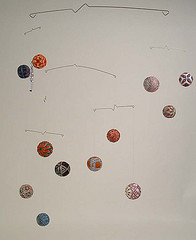
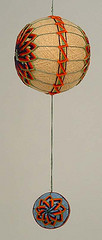
Large temari mobile.

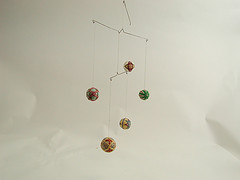
This was a mobile of tiny temari (at most 1 1/2″ in diameter) that I made for Lynne (my mom). I have always loved making mobiles and this art form seemed to just scream at me “Make me into a mobile!” The photo below is a smaller mobile I made for Loryn (my sister).

Small temari mobile.

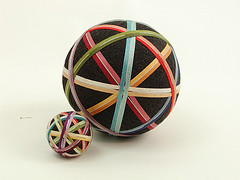
Double temari.

Set of matching ribbon temari.
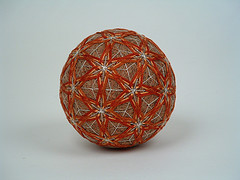
Orange star temari.

These are just some examples of temari I made. I made them for most of the family and I still laugh to see them. I made so many that I have forgotten what they look like and who I gave them to. It makes it loads of fun to see the products of my creativity from what feels like new eyes and gives me a whole new perspective on what I consider good, successful work.